
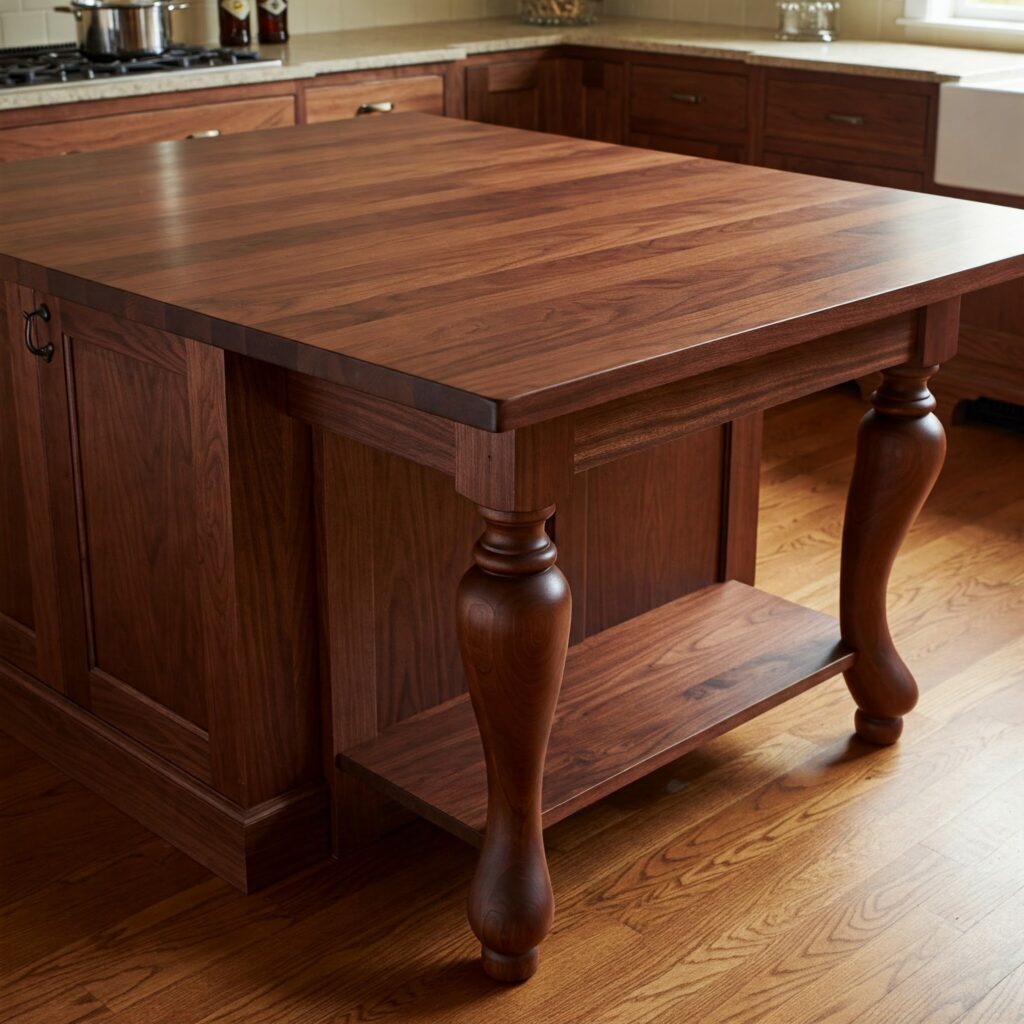
So you’re thinking about adding a stained wood kitchen island table with legs to your kitchen? Great choice. Whether you’re remodeling from scratch or just want to refresh the heart of your home, a legged kitchen island in stained wood is one of the most versatile, beautiful, and functional upgrades you can make.
This article digs deep into the best ideas, stain colors, wood types, leg styles, and design combos to help you find the perfect setup for your space. No fluff — just real, useful ideas backed by design trends, expert opinions, and homeowner experiences.
What Is a Stained Wood Kitchen Island Table with Legs?
Before we jump into ideas, let’s get clear on what we’re talking about. A kitchen island table with legs is a freestanding island that sits on four (or more) visible legs, as opposed to base cabinet-style islands that sit flush to the floor. When you add a stained wood finish, you’re enhancing the natural grain and texture of the wood with a pigmented or tinted treatment that protects the surface while giving it warmth, character, and style.
This combo — stained wood + visible legs — hits a sweet spot between:
- Rustic farmhouse charm
- Mid-century modern elegance
- Industrial edge
- Coastal casual vibes
And because it’s freestanding, you can move it, repurpose it, or take it with you when you move. That’s a big deal.
Why Choose a Stained Wood Kitchen Island Table with Legs?
Here’s the thing — there are a ton of kitchen island options out there. So why go with a stained wood version on legs specifically?
It Opens Up the Space
Solid base islands can make a kitchen feel boxed in, especially in smaller homes. Legs create visual breathing room. The eye can travel underneath the piece, which makes the floor feel larger and the kitchen feel more airy.
Stained Wood Adds Warmth and Texture
Paint is fine. But stained wood? It’s on another level. The grain shows through. Every piece is unique. You get depth and richness that paint simply can’t replicate.
It Works Across Styles
Whether your kitchen is ultra-modern or cozy farmhouse, there’s a stain color and leg style that fits. We’ll cover that in detail below.
It’s More Affordable Than Built-Ins
Custom built-in islands can run $3,000–$10,000+. A quality freestanding stained wood island table with legs? You can find gorgeous options for $300–$2,000 depending on size and wood type.
| Type | Average Cost | Mobility | Customization |
|---|---|---|---|
| Built-in island | $3,000–$10,000+ | None | High |
| Freestanding stained wood island with legs | $300–$2,000 | Easy | Medium–High |
| IKEA hack island | $200–$600 | Easy | Low–Medium |
| Cart-style island | $100–$500 | Very easy | Low |
Best Stain Colors for Kitchen Island Tables with Legs
Choosing the right stain is honestly half the battle. The color sets the entire mood of your kitchen. Here are the top picks and what they work best with:
Dark Walnut Stain
This is the most popular stain color for kitchen islands right now — and for good reason. Dark walnut gives off rich, moody, sophisticated energy. It contrasts beautifully with white or light grey cabinetry and adds a grounding effect to airy kitchens.
Suggested read: Kitchen & Table: How to Design, Style, and Elevate Your Dining Space in 2025
Best paired with: White shaker cabinets, matte black hardware, concrete or light wood floors.
Classic Oak / Golden Oak Stain
If you love that warm, honey-toned look, golden oak is your friend. It feels cozy, welcoming, and very on-trend with the current cottagecore and grandmillennial aesthetics taking over interior design.
Best paired with: Cream or sage green cabinets, brass or gold hardware, terracotta or warm-toned tiles.
Jacobean Stain
Jacobean sits between dark walnut and ebony — a deep, chocolatey brown with subtle warm undertones. It reads as almost black in low light and shows off wood grain beautifully in natural light. One of the best choices for mid-century modern or Scandinavian-inspired kitchens.
Best paired with: White or pale grey kitchens, hairpin legs or tapered legs, minimalist hardware.
Early American / Medium Brown Stain
A classic medium-tone stain that works with virtually everything. Not too dark, not too light. It’s the vanilla ice cream of stains — reliable, universally loved, and hard to mess up.
Best paired with: Traditional, transitional, or farmhouse-style kitchens.
Natural / Clear Stain
Sometimes you just want to let the wood be wood. A natural or clear stain protects the surface while enhancing the raw, organic look of the grain. This is amazing for live edge islands or statement pieces where the wood itself is the star.
Best paired with: Modern organic kitchens, Japandi aesthetics, light wood floors.
Ebony Stain
Bold. Dramatic. Striking. An ebony-stained island creates a serious focal point in any kitchen. It’s a bit of a commitment, but the results are chef’s kiss.
Best paired with: All-white kitchens, industrial or contemporary spaces, statement pendant lighting.
Best Wood Types for a Stained Kitchen Island Table with Legs
Not all wood stains the same way. Some absorb stain beautifully, others require a wood conditioner to avoid blotchiness. Here’s what you need to know:
Suggested read: What a Rustic Kitchen Island Brings to Your Home: Warmth, Storage, and an Inviting Heart
Oak
The #1 choice for stained kitchen islands. Oak has open, visible grain that absorbs stain evenly and shows beautiful character after staining. It’s also incredibly durable and resistant to moisture — key for kitchen use.
- Durability: ⭐⭐⭐⭐⭐
- Stain absorption: ⭐⭐⭐⭐⭐
- Cost: Medium
Maple
Maple is very hard and durable, but it has a tight grain that can stain unevenly without a pre-conditioner. When done right, though, maple with a dark stain looks absolutely stunning — smooth and sleek.
- Durability: ⭐⭐⭐⭐⭐
- Stain absorption: ⭐⭐⭐ (needs conditioner)
- Cost: Medium–High
Pine
Pine is soft and very affordable. It takes stain well but can dent more easily. Great for farmhouse or rustic-style kitchens where imperfections add charm.
- Durability: ⭐⭐⭐
- Stain absorption: ⭐⭐⭐⭐
- Cost: Low
Poplar
Often used as a painted wood, poplar can actually stain nicely in darker tones. It’s a budget-friendly hardwood that’s a popular choice for painted or dark-stained island tables.
- Durability: ⭐⭐⭐⭐
- Stain absorption: ⭐⭐⭐
- Cost: Low–Medium
Walnut
If you want the real thing — not a stain pretending to be walnut, but actual walnut wood — it’s breathtakingly beautiful and naturally rich in color. No stain needed, but a clear oil or wax finish makes it pop.
- Durability: ⭐⭐⭐⭐
- Stain absorption: ⭐⭐⭐⭐
- Cost: High
Reclaimed Wood
Reclaimed barn wood or salvaged hardwood brings unmatched character. Each plank tells a story. The natural weathering means stains look uniquely aged and patchy in the best possible way.
- Durability: Varies
- Stain absorption: ⭐⭐⭐⭐
- Cost: Medium–High
Leg Styles for Stained Wood Kitchen Island Tables
The legs you choose dramatically change the entire vibe of the piece. Let’s break down the most popular options:
Tapered Legs
The most versatile leg style. Tapered legs (wider at the top, narrowing toward the floor) work in farmhouse, mid-century modern, transitional, and contemporary kitchens. Usually made of wood to match the top.
Vibe: Clean, classic, timeless.
Hairpin Legs
Hairpin legs — those slender, multi-rod metal legs — are a modern design icon. They add an industrial edge and are especially popular for darker stained tops. They’re typically steel, available in matte black, raw metal, or gold.
Vibe: Modern, industrial, trendy.
“Hairpin legs on a dark walnut island changed the entire feel of my kitchen. It went from builder-grade to boutique in one weekend.” — Homeowner review on Houzz
Suggested read: Stunning Modern Kitchen Island Lighting Ideas for 2026
Turned Legs (Spindle Legs)
Turned legs have decorative grooves and curves carved into them. They scream traditional, Victorian, and farmhouse charm. Gorgeous paired with a golden oak or dark stain.
Vibe: Farmhouse, cottage, traditional.
Chunky Square Legs
Bold, thick square legs give off serious rustic cabin energy. Often used on heavy, solid wood island tables with live edges or rough-hewn surfaces.
Vibe: Rustic, industrial, bold.
X-Base or Trestle Style
Some stained wood island tables sit on an X-shaped trestle base instead of four individual legs. This adds visual interest and stability while still feeling open at the base.
Vibe: Farmhouse, traditional, statement piece.
Top Design Ideas for a Stained Wood Kitchen Island Table with Legs
Okay — here’s where it gets fun. Let’s look at actual design scenarios and how to nail the look.
Idea 1: Dark Walnut Island with White Shaker Cabinets
This is the quintessential modern farmhouse combo. The contrast between the deep stained wood kitchen island and the crisp white cabinets is clean, fresh, and never goes out of style.
How to do it:
- Use oak or poplar for the island top
- Apply Minwax Dark Walnut stain in 2 coats
- Finish with a matte polyurethane for durability
- Use turned or tapered legs in the same stained wood
- Add bar stools in natural linen or black leather
Idea 2: Golden Oak Island in a Green Kitchen
Sage green cabinets are everywhere right now — and for good reason. Pairing them with a warm golden oak stained wood kitchen island table with legs creates the most gorgeous earthy, nature-inspired kitchen.
Key details:
- Brass or unlacquered brass hardware throughout
- Open shelving on one wall with matching stained wood
- Woven bar stools or rattan seating
- Terracotta or zellige tile backsplash
Idea 3: Ebony-Stained Island as a Statement Piece
In an all-white kitchen, an ebony-stained island becomes the focal point. It’s bold, luxurious, and surprisingly timeless.
Suggested read: Best 3 Hole Kitchen Faucet Picks That Will Transform Your Sink Setup
Make it work:
- Keep the rest of the kitchen neutral and clutter-free
- Use matte black hardware and fixtures to tie it in
- Hang dramatic pendant lights above
- Consider a waterfall edge on the island top
Idea 4: Reclaimed Wood Island with Hairpin Legs
Nothing says character like reclaimed wood on hairpin legs. The contrast between the old, weathered wood and the sleek metal is visually stunning and super on-trend with kitchen island table with legs aesthetics.
Tips:
- Sand the reclaimed wood lightly but leave natural imperfections
- Apply a dark tung oil or stain to even out the tones slightly
- Use matte black hairpin legs for a modern-industrial feel
- Leave underneath open — no lower shelf — to maximize the leg impact
Idea 5: Light Natural Stain in a Scandinavian Kitchen
If your style is minimalist and serene — muted tones, light woods, clean lines — a natural or very light stain on your stained wood kitchen island is perfect. Think Japandi or Scandi-inspired design.
Make it work:
- Use pine or ash with a natural or whitewash stain
- Keep legs slender and tapered in the same light wood
- Pair with all-white or pale grey cabinetry
- Add simple greenery and ceramic vessels for decoration
How to Stain a Kitchen Island Table with Legs: Step-by-Step
Want to DIY your stained wood kitchen island table with legs? Here’s how it’s done right.
What You’ll Need
- Sandpaper (80, 120, 180, and 220 grit)
- Wood conditioner (for soft or tight-grained woods like pine or maple)
- Oil-based or water-based stain (your chosen color)
- Foam rollers or brushes
- Lint-free rags
- Polyurethane, oil, or wax topcoat
- Painter’s tape and drop cloths
Step 1: Sand the Surface
Start with 80-grit sandpaper to remove any old finish or rough spots. Work your way up to 120, 180, and finally 220 grit for a silky smooth surface. Always sand with the grain, never against it.
Step 2: Apply Wood Conditioner (If Needed)
If you’re working with pine, cherry, alder, or maple, apply a pre-stain wood conditioner and let it sit for 15–30 minutes. This prevents blotchy, uneven stain absorption.
Step 3: Apply the Stain
Using a foam brush or lint-free cloth, apply stain in the direction of the grain. Let it soak in for 3–5 minutes, then wipe off the excess with a clean rag. The longer you leave it, the darker it gets. Apply a second coat if you want a deeper tone.
Step 4: Let It Dry Completely
Oil-based stains typically need 8–12 hours to dry. Water-based stains dry faster (2–4 hours). Don’t rush this step.
Step 5: Apply a Protective Topcoat
For kitchen use, you absolutely need a topcoat. Options include:
- Polyurethane — Most durable, best for heavy-use surfaces
- Hardwax oil — Easier to repair, beautiful natural sheen
- Tung oil — Penetrating finish, slightly lower durability but beautiful result
Apply 2–3 coats, lightly sanding between coats with 220-grit sandpaper.
Suggested read: Why a Stainless Steel Kitchen Wash Basin Is the Best Investment You'll Ever Make for Your Home
Case Study: IKEA Hack Stained Wood Island Table with Legs
One of the most popular kitchen projects on Pinterest and YouTube is the IKEA BEKVAM hack — taking a basic IKEA piece, staining it a beautiful color, and adding custom legs to make it look custom and high-end.
The Project Breakdown
Sarah from Nashville shared her BEKVAM kitchen cart transformation on Instagram. Here’s how she pulled it off:
- Started with a $150 IKEA BEKVAM kitchen cart
- Sanded the entire piece and removed the factory finish
- Applied Minwax Dark Walnut in two coats
- Finished with Minwax Wipe-On Poly in matte
- Total project cost: under $180
- Result: A stunning, one-of-a-kind stained wood kitchen island that gets compliments from every guest
What This Proves
You don’t need to spend thousands to get that custom, high-end look. With the right stain and a little elbow grease, a basic piece becomes a showstopper. This is exactly why ideas for stained wood kitchen island tables with legs are so popular with budget-conscious homeowners.
Maintaining Your Stained Wood Kitchen Island Table with Legs
Once you’ve got your dream island, you want to keep it looking great. Here’s how:
Daily Care
- Wipe spills immediately — water and acids are your biggest enemies
- Use a soft cloth or microfiber towel for daily cleaning
- Avoid harsh chemical cleaners that can strip the finish
Weekly Care
- Clean with a damp cloth and a few drops of diluted dish soap
- Dry immediately after cleaning — never leave water sitting on the surface
Monthly and Seasonal Care
- Reapply hardwax oil or furniture wax if your finish starts looking dry
- Inspect legs and joints for any loosening or wear
- Lightly sand and re-topcoat any areas showing significant wear
What to Avoid
- Bleach or ammonia-based cleaners
- Placing hot pans directly on the surface
- Leaving wet items on the wood for extended periods
- Dragging sharp objects across the surface
Where to Buy a Stained Wood Kitchen Island Table with Legs
Not ready to DIY? Here are some great places to shop for your perfect stained wood kitchen island table with legs:
| Store | Best For | Price Range |
|---|---|---|
| Wayfair | Wide variety, fast shipping | $300–$1,500 |
| Etsy | Custom handmade pieces | $400–$3,000 |
| Home Depot / Lowe’s | Affordable ready-made options | $200–$800 |
| IKEA | DIY hack bases | $100–$400 |
| Pottery Barn | High-end styled options | $800–$2,500 |
| Facebook Marketplace | Secondhand refinishing finds | $50–$500 |
Frequently Asked Questions About Stained Wood Kitchen Island Tables with Legs
What is the best stain color for a kitchen island table with legs?
Dark walnut is currently the most popular and versatile stain for kitchen island tables with legs. It works with white, grey, and green cabinetry and pairs beautifully with both wood and metal leg styles. However, the best color really depends on your cabinet color, flooring, and overall kitchen aesthetic.
Can I stain a kitchen island table with legs myself?
Absolutely! Staining a kitchen island is one of the most beginner-friendly DIY projects you can do. The key steps — sanding, conditioning, staining, and topcoating — are straightforward as long as you take your time and work in a well-ventilated space.
What type of wood is best for a stained kitchen island table with legs?
Oak is widely considered the best option for stained kitchen island tables because of its open grain, durability, and even stain absorption. Maple and walnut are also excellent choices for different aesthetic goals.
How do I keep stained wood from scratching on a kitchen island?
Apply a high-quality topcoat — preferably 2–3 coats of oil-based polyurethane for maximum scratch and water resistance. Avoid placing hot items directly on the surface and always use cutting boards when prepping food.
Are kitchen island tables with legs still in style?
Yes — and they’re actually growing in popularity. Legged islands are especially trendy in farmhouse, mid-century modern, Japandi, and transitional kitchens. Their open base creates a less heavy, more casual feel than enclosed cabinet-base islands.
How much does a stained wood kitchen island table with legs cost?
Prices range widely depending on size, wood type, and whether it’s DIY or purchased. Pre-made options range from about $300 to $2,000. Custom-built islands can run $2,000–$5,000+. DIY refinishing an existing piece can cost as little as $50–$200 in materials.
What height should a kitchen island table with legs be?
Standard kitchen island height is 36 inches (counter height). If you want to use bar stools for seating, aim for 42 inches (bar height). Some island tables are designed at 30 inches (table height) for a more casual dining feel — which works beautifully for the legged style.
Suggested read: Best RV Kitchen Faucet Options That Are Actually Worth Your Money in 2026
Ready to Find Your Perfect Stained Wood Kitchen Island Table with Legs?
Whether you’re shopping for a ready-made piece or rolling up your sleeves for a weekend DIY project, a stained wood kitchen island table with legs is one of the best investments you can make for your kitchen — functionally and aesthetically.
The combination of natural wood character, rich stain tones, and the open airy feel of visible legs creates a look that’s timeless, versatile, and endlessly customizable. From dark walnut drama to honey oak warmth, there’s an idea in this article for every kitchen and every style.
Start with your cabinet color, pick a complementary stain, choose a leg style that matches your vibe, and go for it. Your dream kitchen is closer than you think. Browse the best ideas for stained wood kitchen island tables with legs and start planning your transformation today.
Sources & Further Reading
- Minwax Stain Color Guide — Official resource for stain colors and wood project guides for your stained wood kitchen island table with legs
- Houzz Kitchen Design Ideas — Real homeowner kitchen photos and design inspiration
- This Old House: How to Stain Wood — Expert step-by-step staining instructions
- Wood Magazine: Best Wood for Furniture — In-depth guidance on wood species for your kitchen island project

Author and contributor.
