
“The kitchen sink is the most-used fixture in the home — the right one can transform how you cook, clean, and live.” — National Kitchen & Bath Association (NKBA)
What Is a Single Bowl Kitchen Sink?
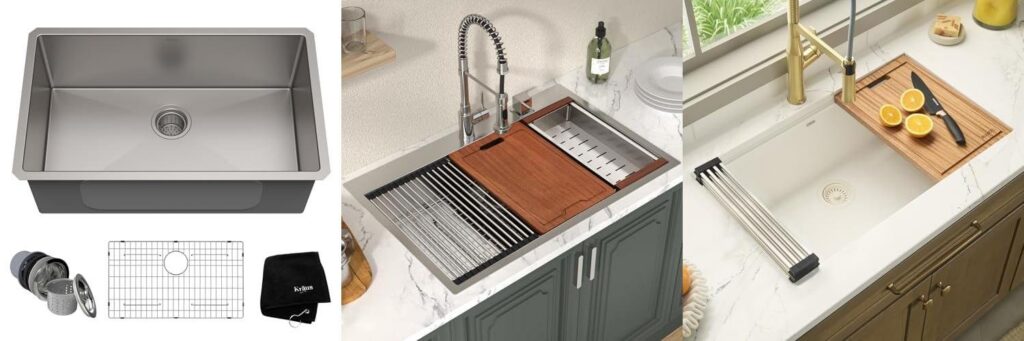
A single bowl kitchen sink is exactly what it sounds like: a sink with one large, undivided basin instead of two separate compartments. Unlike a double bowl sink that splits your workspace into two smaller sections, a single bowl sink gives you one continuous, open space to work with. This seemingly simple distinction has enormous practical implications for how functional your kitchen actually feels on a daily basis.
The concept of a single-basin sink is not new — in fact, farmhouse apron-front sinks, which have been popular for centuries in European kitchens, are almost always single bowl designs. What has changed in recent years is the explosion of materials, configurations, finishes, and price points that now make the single bowl kitchen sink accessible to virtually every homeowner, renter, and kitchen remodeler. From sleek stainless steel undermount options to hand-hammered copper designs, there is a single bowl sink to match every aesthetic and every budget.
Understanding what sets a single bowl sink apart from other sink types requires looking at both the physical dimensions and the practical user experience. The basin of a single bowl sink typically ranges from 24 to 36 inches wide and 8 to 12 inches deep, though some oversized farmhouse models push well beyond these dimensions. That uninterrupted interior space is the defining feature, and it is what makes the single bowl design so appealing to serious home cooks, entertainers, and minimalist design enthusiasts alike.
Why Homeowners Are Choosing Single Bowl Kitchen Sinks Over Double Bowl
The shift toward single bowl kitchen sinks in American and European homes has been measurable and consistent. According to data from the Kitchen & Bath Industry Show (KBIS), single bowl sink installations have grown by over 34% in the last decade, driven largely by open-concept kitchen layouts and the rise of large-format cookware like Dutch ovens, sheet pans, and woks.
Here’s why so many homeowners are making the switch:
- Larger usable basin space — No divider means you can wash a full-size roasting pan or baking sheet without awkward maneuvering.
- Easier to clean — One continuous surface is faster and more hygienic to wipe down than two separate basins with a ridge in between.
- More versatile — Use the entire basin as a soaking trough, a colander station, or even an ice bucket for entertaining.
- Visually striking — The clean, uninterrupted look of a single basin complements modern and contemporary kitchen design beautifully.
- Better for meal prep — Many chefs use their single bowl sink as an active prep station with sink grids, cutting boards, and colander accessories that span the entire width.
A 2023 survey conducted by Houzz found that 61% of homeowners who remodeled their kitchen chose a single basin sink, up from 47% in 2018. This trend is not a passing fad — it reflects a fundamental shift in how people think about kitchen functionality and aesthetics.
Single Bowl vs. Double Bowl Kitchen Sink: Which One Wins?
One of the most common debates in kitchen design is single bowl vs. double bowl sink. Both have their merits, and the right choice genuinely depends on your lifestyle and cooking habits. But for most modern households, the single bowl design has a strong edge. Let’s break it down.
| Feature | Single Bowl Sink | Double Bowl Sink |
|---|---|---|
| Basin Space | Large, undivided | Divided into two smaller basins |
| Best For | Large pots, pans, baking sheets | Multitasking (wash + rinse) |
| Ease of Cleaning | Easier — no divider ridge | Slightly harder — ridge collects grime |
| Design Appeal | Modern, minimalist | Traditional, classic |
| Garbage Disposal | One-side install | Typically one side only |
| Price Range | $150 – $2,500+ | $150 – $1,800+ |
| Plumbing Complexity | Simpler | Slightly more complex |
| Ideal Kitchen Size | Medium to large | Small to medium |
The single basin kitchen sink wins decisively when it comes to accommodating oversized cookware — a real-world advantage that double bowl users frequently overlook until they are wrestling a large stockpot under a divider. However, double bowl sinks still have a valid use case for households that want to separate washing from soaking or keep a dedicated hand-washing side accessible while cooking.
Top Materials for a Single Bowl Kitchen Sink
Choosing the right material for your single bowl sink is just as important as choosing the right size and configuration. Each material has a unique combination of durability, aesthetics, maintenance requirements, and price. Here is an in-depth look at the most popular options.
Stainless Steel Single Bowl Kitchen Sink
Stainless steel is the most popular material for single bowl kitchen sinks in North America, and for good reason. It is durable, heat-resistant, non-porous, lightweight, and relatively affordable. Look for a gauge rating between 16 and 18 — the lower the number, the thicker (and better) the steel.
Suggested read: Why a Stainless Steel Kitchen Wash Basin Is the Best Investment You'll Ever Make for Your Home
- Pros: Affordable, hygienic, heat-resistant, compatible with all kitchen styles
- Cons: Can scratch over time, water spots require regular wiping
- Price Range: $150 – $800
- Top Brands: Kraus, Kohler, Blanco, Ruvati
A 16-gauge stainless steel single bowl kitchen sink is widely considered the gold standard for home kitchens — thick enough to resist denting and flexing, yet still affordable for most budgets.
Fireclay Single Bowl Kitchen Sink
Fireclay is a premium material made from ceramic clay fired at extremely high temperatures. The result is an incredibly dense, non-porous, chip-resistant surface that is beloved for farmhouse-style kitchen designs. Fireclay single bowl sinks are especially popular as apron-front (farmhouse) styles.
- Pros: Extremely durable, classic look, easy to clean, resists staining and scratching
- Cons: Very heavy (may require cabinet reinforcement), premium price
- Price Range: $500 – $2,500
- Top Brands: Rohl, Kohler, Shaws Original
Composite Granite Single Bowl Kitchen Sink
Composite granite sinks are made from a blend of granite stone dust and acrylic resin. They are remarkably durable, heat-resistant, and available in a wide range of colors — far more than stainless steel. A composite granite single bowl sink is an excellent choice for homeowners who want color flexibility without sacrificing durability.
- Pros: Scratch-resistant, heat-resistant, available in many colors, sound-deadening
- Cons: Can be heavy, some colors show water spots more
- Price Range: $250 – $1,200
- Top Brands: Blanco, Elkay, Franke
Copper Single Bowl Kitchen Sink
For those who want a truly unique and artisanal kitchen fixture, a copper single bowl sink is a stunning choice. Copper is naturally antimicrobial — it kills bacteria on contact — and develops a beautiful patina over time that many homeowners love.
- Pros: Antimicrobial, unique aesthetic, develops character over time
- Cons: Requires specific cleaning products, can dent, premium price
- Price Range: $400 – $3,000+
- Top Brands: Native Trails, Sinkology, Premier Copper Products
Best Single Bowl Kitchen Sink Sizes: What You Need to Know
Size selection is one of the most critical decisions when choosing a single bowl kitchen sink. Too small, and you lose the very benefits the single bowl design offers. Too large, and you risk overwhelming your counter space or mismatching your cabinet dimensions.
Standard Sizes for Single Basin Kitchen Sinks
| Sink Width | Best For | Cabinet Size Required |
|---|---|---|
| 24 inches | Small kitchens, apartments | 27-inch base cabinet |
| 27 inches | Average home kitchen | 30-inch base cabinet |
| 30 inches | Most popular size | 33-inch base cabinet |
| 33 inches | Large kitchen, avid cooks | 36-inch base cabinet |
| 36+ inches | Chef kitchens, farmhouse style | 39-inch base cabinet |
Depth matters just as much as width. A sink depth of 9 to 10 inches is ideal for most households — deep enough to contain splashing and accommodate tall pots, but shallow enough to avoid back strain from leaning over the basin. Professional-style sinks often go to 10 to 12 inches of depth, which is excellent for serious cooks but may require a taller user to avoid discomfort.
Pro Tip: Always measure your existing base cabinet before ordering. Most 30-inch single bowl kitchen sinks fit into a standard 33-inch base cabinet with a 3-inch clearance on each side for the mounting hardware.
Single Bowl Kitchen Sink Installation Types Explained
How your single bowl sink is mounted has a significant impact on both its aesthetic and its practicality. There are four primary installation methods, each suited to different kitchen styles and countertop materials.
Undermount Single Bowl Kitchen Sink
The undermount single bowl kitchen sink is mounted beneath the countertop, creating a seamless transition between the sink basin and the countertop surface. This is the most popular installation style for modern and contemporary kitchens.
Why homeowners love it:
- Counter crumbs and water wipe directly into the sink — no ridge to catch debris
- Shows off the full beauty of stone or solid surface countertops
- Easier to keep clean and more hygienic overall
- Creates a sleek, high-end appearance
Best countertop pairings: Granite, quartz, marble, solid surface (like Corian)
Drop-In (Top-Mount) Single Bowl Kitchen Sink
The drop-in single bowl kitchen sink (also called a top-mount or self-rimming sink) drops into a hole cut in the countertop and rests on its own rim. This is the most common installation type in existing kitchens because it is compatible with virtually any countertop material and is the easiest to install.
Suggested read: Single Bowl Kitchen Sink Buyer's Guide: Finding the Perfect Sink for Your American Kitchen
Key advantages:
- Easy DIY installation — no special tools or professional required
- Works with laminate, tile, and any countertop type
- Easy to replace without countertop modification
- Generally more affordable
Drawback: The rim creates a small ledge where water and grime can accumulate, requiring regular cleaning.
Farmhouse (Apron Front) Single Bowl Kitchen Sink
The farmhouse single bowl kitchen sink — also called an apron front sink — extends forward beyond the cabinet face, replacing a portion of the cabinet front with the front face of the sink. This design is deeply rooted in European country kitchen traditions and has experienced a massive resurgence in American homes over the past 15 years.
Farmhouse single bowl sinks are almost exclusively single bowl designs, and for good reason: the wide, deep, exposed-front basin is a defining visual statement that works best as one large, uninterrupted space. Fireclay and copper are the most popular materials for farmhouse sinks, though stainless steel farmhouse sinks are increasingly common.
Case Study: The Farmhouse Kitchen Renovation Trend
A 2022 analysis by Zillow found that listings featuring farmhouse-style kitchens sold for an average of 6.9% more than comparable homes without farmhouse details. Apron-front single bowl sinks were among the top five design elements cited by buyers as influencing their interest in the property. This data point illustrates that a single bowl kitchen sink is not just a practical upgrade — it can directly impact your home’s resale value.
Flush-Mount Single Bowl Kitchen Sink
A flush-mount sink sits perfectly level with the surrounding countertop, creating an ultra-smooth, integrated look. This style is most common in stainless steel professional kitchens and requires precise fabrication. It is less common in residential settings but growing in popularity among minimalist design enthusiasts.
The Best Single Bowl Kitchen Sinks in 2025: Top Picks by Category
Whether you are on a tight budget or investing in a forever kitchen, there is a single bowl kitchen sink that fits your needs perfectly. Here are the top picks across key categories.
Best Overall: Kraus KHU100-30 Standart PRO Stainless Steel Single Bowl Sink
The Kraus KHU100-30 is consistently rated as one of the best single bowl kitchen sinks available for home use. It features a 16-gauge stainless steel construction, a 30-inch wide basin, and a 10-inch depth that accommodates virtually any cookware.
- Price: ~$270 – $350
- Why it wins: Exceptional build quality, quiet sound-dampening pads, compatible with most garbage disposals, and easy undermount installation
- Customer rating: 4.8/5 (4,000+ reviews on major retail sites)
Best Budget: Elkay Lustertone Classic ELUH2115 Single Bowl Undermount Sink
For homeowners who want premium quality at an accessible price, the Elkay Lustertone line delivers. Elkay is one of the most respected names in American sink manufacturing, and this model offers 18-gauge stainless steel with a beautiful satin finish.
- Price: ~$170 – $220
- Why it wins: Trusted brand, lifetime warranty, excellent fit and finish for the price
Best Farmhouse: Rohl RC3017 Shaws Original Fireclay Single Bowl Sink
If a farmhouse apron-front look is your goal, the Rohl Shaws Original is widely regarded as the gold standard. Made in England using traditional fireclay methods dating back over 130 years, this sink is as beautiful as it is durable.
- Price: ~$1,100 – $1,800
- Why it wins: Handcrafted quality, extraordinary durability, timeless British design that elevates any kitchen
Best Composite: Blanco PRECIS 441578 Super Single Bowl Sink
The Blanco PRECIS in silgranit composite is a standout performer in the composite granite category. It is highly scratch-resistant, heat-resistant up to 536°F, and available in 10+ colors to complement any kitchen palette.
Suggested read: Why Signature Kitchen Suite Is the Brilliant Luxury Investment Serious Home Chefs Are Making
- Price: ~$380 – $550
- Why it wins: Color versatility, exceptional durability, whisper-quiet, unique texture
How to Choose the Right Single Bowl Kitchen Sink for Your Home
Selecting the perfect single bowl sink for your kitchen requires thinking through several interconnected factors. Rushing this decision is one of the most common mistakes homeowners make during a kitchen renovation.
Step 1: Measure Your Cabinet Opening
Before looking at any sink, measure the interior width of your base cabinet where the sink will sit. Subtract approximately 2 to 3 inches from each side to allow for mounting hardware and cabinet frame clearance. This gives you your maximum sink width.
Step 2: Choose Your Installation Type
Decide between undermount, drop-in, or farmhouse installation based on your countertop material and your design goals. Remember:
- Undermount requires a solid, stone, or solid-surface countertop
- Drop-in works with any countertop
- Farmhouse requires cabinet modification
Step 3: Select Your Material Based on Lifestyle
| Lifestyle | Best Material |
|---|---|
| Busy family kitchen | 16-gauge stainless steel |
| Design-forward / modern | Composite granite or fireclay |
| Farmhouse / traditional | Fireclay or copper |
| Rental / budget renovation | 18-gauge stainless steel |
| Professional cooking enthusiast | 16-gauge or 14-gauge stainless steel |
Step 4: Consider Accessories and Compatibility
Many single bowl kitchen sinks come as part of a complete system with matching accessories that dramatically expand functionality:
- Sink grids: Protect the basin bottom and elevate cookware for drainage
- Rolling cutting boards: Span the full width of the basin for additional prep space
- Colander inserts: Fit perfectly inside the basin for rinsing produce
- Drying racks: Slide across the basin top to drip-dry dishes
- Garbage disposal compatibility: Confirm your preferred sink works with your existing or planned disposal unit
Step 5: Set a Realistic Budget
Here is a realistic budget breakdown for a single bowl kitchen sink project including installation:
| Budget Tier | Sink Cost | Installation Cost | Total |
|---|---|---|---|
| Budget | $150 – $300 | $150 – $250 | $300 – $550 |
| Mid-Range | $300 – $700 | $200 – $350 | $500 – $1,050 |
| Premium | $700 – $2,500 | $300 – $500 | $1,000 – $3,000 |
How to Maintain and Care for Your Single Bowl Kitchen Sink
Proper maintenance keeps your single bowl kitchen sink looking and functioning beautifully for decades. The right care routine depends entirely on the material you choose.
Stainless Steel Maintenance
- Daily: Rinse and wipe dry with a soft cloth to prevent water spots
- Weekly: Clean with a non-abrasive cleaner (like Bar Keepers Friend) in the direction of the grain
- Never use: Steel wool, bleach, or abrasive scrubbers that can scratch the finish
- Prevent rust rings: Never leave cast iron cookware sitting wet in the sink
Fireclay Maintenance
- Daily: Rinse with warm water and mild dish soap
- Weekly: A gentle baking soda scrub removes any surface staining
- Avoid: Harsh acidic cleaners that can etch the glaze over time
- Tip: Fireclay’s dense surface is highly resistant to staining — most marks wipe right off
Composite Granite Maintenance
- Daily: Warm water and dish soap — that’s it for most cleaning needs
- Monthly: Treat with a composite sink conditioner to maintain the finish
- Avoid: Prolonged contact with very dark liquids like red wine, coffee, or beet juice (wipe up spills promptly)
- Benefit: Composite granite is naturally sound-absorbing, so it is naturally quieter than stainless steel
Single Bowl Kitchen Sink Trends Shaping Design in 2025
The single bowl kitchen sink market is evolving rapidly, driven by innovations in materials, finishes, and integrated technology. Here are the key trends defining the category right now.
1. Matte Black and Gunmetal Finishes
Traditional brushed stainless steel is no longer the only option. Matte black single bowl kitchen sinks have surged in popularity, particularly in modern and industrial-style kitchens. Brands like Kraus, Ruvati, and Kohler now offer extensive matte black lineups that pair beautifully with black faucets and hardware.
2. Workstation Sinks
The workstation single bowl kitchen sink is perhaps the most significant innovation in the category in the last decade. These sinks feature built-in ledges along the perimeter of the basin that hold custom accessories — cutting boards, colanders, drying racks — that slide and lock into place. Brands like Ruvati, Kraus, and Bocchi have popularized this format.
A workstation single bowl sink essentially turns your sink basin into a multi-functional kitchen prep station, allowing you to wash, prep, drain, and dry in one seamless workflow without cluttering the surrounding countertop.
3. Integrated Smart Technology
High-end kitchen brands are beginning to integrate sensor-activated faucets, filtered water dispensers, and even built-in scales directly into premium sink systems. While still a niche segment, smart-integrated single basin sinks are expected to grow significantly through 2026 and 2027.
4. Oversized Deep Basin Designs
Driven by the popularity of large-format cookware (particularly the Dutch oven and cast iron skillet renaissance), oversized single bowl sinks with depths of 11 to 12 inches are increasingly popular. These professional-depth basins make washing oversized pots effortless and reduce water splashing.
Suggested read: Why an Oil Rubbed Bronze Kitchen Faucet Is the Jewelry Your Kitchen Needs
5. Sustainable and Recycled Materials
Eco-conscious homeowners are increasingly seeking sinks made from recycled stainless steel or sustainable composite materials. Brands like Native Trails (which uses recycled copper) and several European manufacturers now produce single bowl sinks with documented sustainability credentials and environmental certifications.
What Professionals Say About Single Bowl Kitchen Sinks
Kitchen designers, plumbers, and culinary professionals consistently advocate for the single bowl design for working kitchens. Here is what the experts say:
“When clients ask me what single change makes the biggest difference in kitchen functionality, I always say: go to a single bowl sink. The extra workspace it creates is something you will notice every single day.” — Sarah M., NKBA-Certified Kitchen Designer, Chicago, IL
“From a plumbing standpoint, a single bowl undermount sink is a dream to install and maintain. One drain, one basket strainer, simple trap configuration. Less that can go wrong.” — James R., Master Plumber, Portland, OR
“As someone who cooks professionally and at home, having a single large basin means I can pre-soak my biggest stockpots right in the sink. That alone justifies the upgrade.” — Chef Amanda L., Food Network contributor
The Environmental Benefits of Choosing a Single Bowl Kitchen Sink
Beyond aesthetics and functionality, there is an environmental argument for the single bowl kitchen sink that many homeowners overlook. A larger, deeper basin can actually encourage more efficient water use in several ways:
- Larger soaking capacity means you can soak more dishes in one load instead of running the faucet continuously
- Single drain design is simpler and less prone to leaks, reducing wasted water from plumbing failures
- High-quality single basin sinks made from stainless steel or composite granite are highly durable and long-lasting, reducing the environmental impact of frequent replacements
- Stainless steel is one of the most recyclable materials on the planet — over 70% of stainless steel produced today contains recycled content
Choosing a durable, high-quality single bowl kitchen sink is genuinely a more sustainable decision than purchasing cheaper alternatives that need frequent replacement.
Common Mistakes to Avoid When Buying a Single Bowl Kitchen Sink
Even well-researched homeowners make avoidable mistakes when purchasing a single bowl kitchen sink. Here are the most common errors and how to sidestep them.
Mistake 1: Not measuring the cabinet opening first Always measure before you shop. A sink that is even 1 inch too wide will not fit without costly cabinet modification.
Mistake 2: Prioritizing looks over gauge/thickness A beautiful sink that dents and flexes within a year is a terrible investment. For stainless steel, always prioritize 16-gauge or better.
Mistake 3: Ignoring sink depth A shallow single bowl sink loses many of its advantages. Aim for 9 to 10 inches minimum for meaningful usability.
Mistake 4: Forgetting to check garbage disposal compatibility Not all single bowl sinks are compatible with all garbage disposal models. Confirm compatibility before purchase.
Suggested read: Why Aqua Fusion Quartzite from Brazil Is the Most Stunning Kitchen Stone You Will Ever Use
Mistake 5: Buying the cheapest option The kitchen sink is one of the most-used fixtures in your entire home. Investing an extra $100 to $200 in a higher-quality option nearly always pays off in longevity and daily satisfaction.
Mistake 6: Not accounting for installation costs The sink purchase price is only part of the total cost. Budget for professional plumbing installation, especially for undermount and farmhouse configurations.
🛒 Ready to Upgrade? Shop the Best Single Bowl Kitchen Sinks
If you are ready to transform your kitchen with a single bowl kitchen sink, the best time to buy is now. Whether you are drawn to the sleek simplicity of stainless steel, the timeless elegance of fireclay, or the bold personality of composite granite, a single bowl sink is one of the highest-ROI kitchen upgrades you can make.
Top retailers for single bowl kitchen sinks include:
- Build.com — Extensive selection across all price ranges and materials
- The Home Depot — Wide in-store and online availability, easy returns
- Ferguson — Premium selection with expert kitchen design support
- Amazon — Competitive pricing with fast shipping on top brands
- Wayfair — Strong selection of farmhouse and composite options
📌 Internal Link: Compare the top-rated undermount single bowl kitchen sinks to find the perfect basin size and material for your home renovation project.
Frequently Asked Questions About Single Bowl Kitchen Sinks
What is the most popular size for a single bowl kitchen sink?
The 30-inch single bowl kitchen sink is the most popular size for North American homes. It fits into a standard 33-inch base cabinet with room for mounting hardware, and offers ample basin space for most cooking and cleaning tasks without overwhelming a medium-sized kitchen.
Is a single bowl kitchen sink better than a double bowl?
For most homeowners — especially those who cook frequently and use large pots and pans — a single bowl kitchen sink is better than a double bowl sink. The undivided basin accommodates oversized cookware, is easier to clean, and creates a more streamlined aesthetic. Double bowl sinks still work well in smaller kitchens where multitasking workspace is a priority.
How deep should a single bowl kitchen sink be?
A depth of 9 to 10 inches is ideal for most households. This depth is sufficient to contain splashing, accommodate large stockpots and sheet pans, and keep the sink functional without causing excessive bending or leaning. Professional chef-style sinks go to 10 to 12 inches for maximum capacity.
Can you install a garbage disposal with a single bowl kitchen sink?
Yes. In fact, a single bowl sink with garbage disposal is a very common and practical combination. Since there is only one drain, you simply install the garbage disposal on that drain — a simpler setup than a double bowl sink, where the disposal goes on only one side. Always confirm that your chosen sink’s drain opening is compatible with your disposal model.
How long does a single bowl kitchen sink last?
A high-quality single bowl kitchen sink can last 20 to 50 years or more with proper care. Fireclay sinks are often cited as lasting a lifetime, while stainless steel sinks (16-gauge or better) typically last 20 to 30 years in regular home use. Composite granite falls in the 20 to 40 year range. Cheaper 18-gauge or 20-gauge stainless steel sinks may show denting, scratching, or finish wear within 5 to 10 years of heavy use.
What gauge stainless steel is best for a single bowl kitchen sink?
16-gauge stainless steel is the best choice for a single bowl kitchen sink in a home kitchen. It strikes the ideal balance between durability (thick enough to resist dents and flexing) and weight (light enough for straightforward installation). Professional-grade kitchens sometimes use 14-gauge, but for home use, 16-gauge is the sweet spot. Avoid anything thicker than 18-gauge for a kitchen sink you plan to use heavily.
Is a single bowl kitchen sink good for small kitchens?
Yes — a single bowl kitchen sink for small kitchens actually works very well. A 24-inch or 27-inch single bowl sink takes up less counter real estate than a comparable double bowl sink while still offering the benefit of one uninterrupted basin. In a small kitchen, even a compact single bowl design gives you more effective workspace than a divided double bowl of similar total width.
Suggested read: Best 3 Hole Kitchen Faucet Picks That Will Transform Your Sink Setup
What is a workstation single bowl kitchen sink?
A workstation single bowl kitchen sink is a single basin sink with built-in ledges along the perimeter that accept slide-in accessories like cutting boards, colanders, and drying racks. The accessories rest above the basin floor, effectively turning the sink into an elevated prep station. Top workstation sink brands include Ruvati, Kraus, and Bocchi, and they are widely regarded as the most functional category of single bowl sink available today.
Citations and Sources
- National Kitchen & Bath Association (NKBA) — Kitchen Design Trends Report 2023
- Houzz — U.S. Houzz Kitchen Trends Study, 2023. https://www.houzz.com/magazine/2023-us-houzz-kitchen-trends-study-stsetivw-vs~163726116
- Zillow Research — Home Features That Sell, 2022. https://www.zillow.com/research/
- Build.com — Single Bowl Kitchen Sink Collection. https://www.build.com/single-bowl-kitchen-sink/c104044
- Kitchen & Bath Industry Show (KBIS) — Industry Trend Data 2022–2024
- U.S. Department of Energy — Water Efficiency in Kitchen Design, 2022

Author and contributor.
