
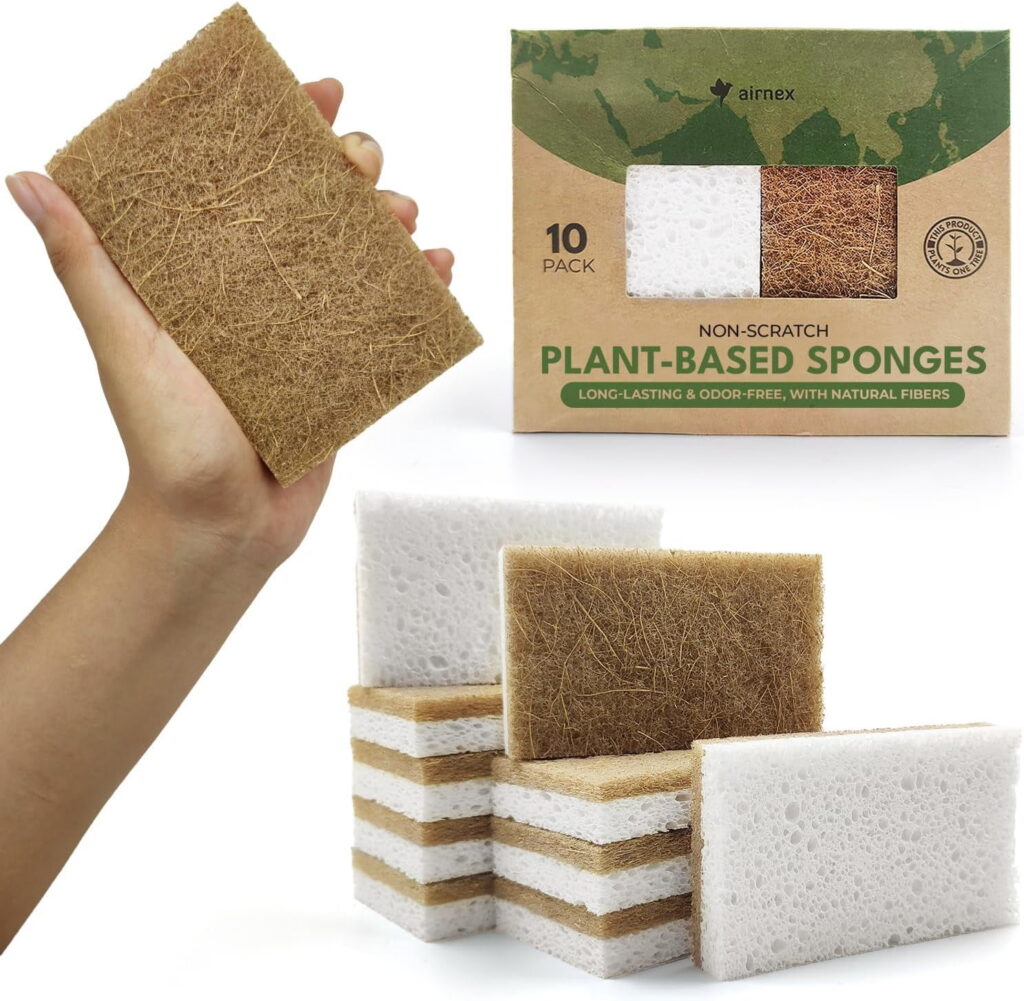
Biodegradable Kitchen Sponges: Complete Beginner Guide
By our editorial team · Reviewed for accuracy with reference to BPI and ASTM International standards
If you’ve ever watched a worn-out sponge sit in the trash and wondered where it ends up, you’re not alone. Most conventional kitchen sponges are made from polyurethane, a plastic that does not break down in a landfill. Biodegradable kitchen sponges offer a simple swap: plant-based materials like cellulose and wood pulp that can return to the earth instead of lingering for centuries.
This guide explains what “biodegradable” really means, which materials actually work, how to read labels, and what to do with a sponge once you’re done with it. You’ll finish knowing exactly what to look for—and what to avoid.
Key takeaways
- Look for sponges made entirely from plant-based materials, including a plastic-free scrubbing layer.
- “Biodegradable” and “compostable” are not the same thing. Certifications like BPI and ASTM D6400 matter.
- Most biodegradable sponges can go in a home compost bin, but you must remove any non-compostable scrubber layer first.
- Expect to pay slightly more than a conventional sponge, but the environmental payoff is real.
Why switch from plastic sponges?
Standard kitchen sponges are made from polyurethane foam. They’re cheap and effective, but they’re also a quiet source of plastic pollution. Research into microplastics has documented that synthetic sponges shed tiny fibers during normal use. Those fibers wash down the drain, pass through water treatment systems, and can end up in rivers and oceans.
There’s also a waste problem. Most American households replace sponges every few weeks, which adds up to millions of plastic sponges in landfills each year. Because polyurethane is not recyclable in most curbside programs, every sponge you’ve ever used probably still exists somewhere in some form. Plant-based sponges break this cycle entirely.
What makes a sponge biodegradable?
A sponge is labeled biodegradable when its materials can be broken down by microorganisms into water, carbon dioxide, and biomass. For kitchen sponges, that means starting with plant-based ingredients instead of petroleum-based plastic.
- Cellulose: The most common base, made from wood pulp. It’s highly absorbent and breaks down readily in compost.
- Loofah (luffa): A dried gourd with a coarse, fibrous texture. It’s a natural scrubber and completely compostable.
- Coconut coir: The fibrous husk of coconuts. It provides serious scrubbing power and is used as an alternative to plastic scouring pads.
- Agave or sisal fibers: Stiff plant fibers sometimes woven into the scrubbing layer of eco-friendly sponges.
One caution: some brands sell a “biodegradable” cellulose sponge with a synthetic scrubby pad glued on top. That scrubby layer is often made of polyester and will not break down. Check the full material list, not just the front of the package.
Biodegradable vs. compostable: the key difference
These two terms are often used interchangeably, but they mean different things.
Biodegradable simply means a material will eventually break down. There’s no time frame attached, and no guarantee it happens in a way that’s safe or useful. A cotton shirt is biodegradable, but in a dry landfill it can last a very long time.
Compostable means the material breaks down within a specific timeframe under the right conditions and leaves no toxic residue. In the United States, the most recognized standard is ASTM D6400, which applies to materials designed for industrial composting facilities. Products that meet this standard often carry a certification mark from the Biodegradable Products Institute (BPI).
Suggested read: Modern Kitchen Island Lighting: Complete Beginner Guide
There’s also a separate standard for home-compostable products, but it’s less common. So before you toss a sponge in your backyard bin, check the label. If it only mentions industrial composting, assume it needs the heat of a commercial facility to break down properly.
Performance checklist: do they clean well?
Yes, but with trade-offs. Natural fiber sponges handle everyday dishes, counters, and appliances well. Their absorbency is comparable to plastic sponges, especially when made from thick cellulose.
Where they differ is in scrubbing. A cellulose sponge alone is too soft for baked-on food, but a layer of coconut coir or loofah changes that. These plant fibers are genuinely abrasive and can tackle stuck-on messes without scratching most surfaces.
Durability is the honest weakness. Biodegradable sponges wear out faster than polyurethane foam, often within two to four weeks of daily use. Softer cellulose can tear at the edges, and loofah tends to flake as it dries out. This trade-off is acceptable to most people, especially because replacing a sponge weekly is already recommended for hygiene reasons.
Odor resistance is actually a point in their favor. Plastic sponges trap bacteria in their dense foam, which is why they start to smell quickly. Open-weave plant fibers dry out faster and seem to stay neutral longer, though they still need proper care.
How to dispose of biodegradable sponges
Your disposal method depends on the sponge and your local options. Here’s the priority order:
- Home compost: If the sponge is made entirely of plants and the label says home-compostable, cut it into small pieces and add it to your bin. Remove any scrubby layer that isn’t plant-based first.
- Municipal compost: Many cities now collect food scraps and compostable packaging. Check with your local program to see if they accept fibrous plant products. Some facilities require items to carry a BPI label.
- Trash as a last resort: Even if you toss it, a plant-based sponge is still better than plastic. In a landfill, cellulose and loofah can decompose in months or a few years, though conditions are far from ideal.
Never flush a sponge. It can cause clogs and doesn’t belong in a septic system.
How to pick the right sponge for you
Before you buy, think about how you clean. If you mostly wash dishes by hand, a thick cellulose sponge with a coconut coir pad covers most jobs. If you have cast iron or delicate nonstick cookware, you may want a plain cellulose sponge and a separate natural bristle brush for heavy jobs.
Check for these details on the label:
- 100% plant-based materials: Including the scouring layer.
- A compost certification such as BPI or a mention of ASTM D6400.
- Minimal packaging: Cardboard wrappers beat a plastic blister pack every time.
Cost is the last consideration. A biodegradable sponge typically costs one to three dollars, compared to less than a dollar for a conventional sponge. However, some brands now sell multipacks that bring the price close to parity. Given that every plastic sponge stays in the environment for generations, most people find the premium reasonable.
Suggested read: Biophilic Design Kitchen: Complete Beginner Guide
5 tips to make your sponge last longer
- Squeeze it out: Wring the sponge thoroughly after each use. Excess water is what lets bacteria multiply.
- Store it dry: Keep it on a rack or in a holder that allows airflow, not on the bottom of the sink.
- Sanitize weekly: Soak it in boiling water or run it through the dishwasher on the top rack.
- Rotate two sponges: Let one dry while you use the other. This alone can double the useful life of both.
- Pair it with a brush: Use a natural fiber dish brush for pre-scrubbing tough food. Your sponge stays cleaner and lasts longer.
Sponge materials at a glance
| Material | Best for | Durability | Compost timeline |
|---|---|---|---|
| Cellulose (wood pulp) | Everyday dishes, gentle cleaning | 2–4 weeks | Weeks to months in compost |
| Loofah (luffa gourd) | Scrubbing produce, counters, mild scrubbing | 3–6 weeks | Months in compost |
| Coconut coir | Baked-on food, pots, pans | 4–8 weeks | Months in compost |
| Cellulose + plant scrubber blend | All-purpose household cleaning | 3–5 weeks | Only if the scrubber layer is plant-based |
Frequently asked questions
What exactly is a biodegradable kitchen sponge made of?
Most are made from cellulose derived from wood pulp. Some add plant-based scrubbers like coconut coir, loofah, or agave fibers. True biodegradable sponges contain no polyurethane or polyester.
Is biodegradable the same as compostable?
No. Biodegradable means a material will eventually break down. Compostable means it breaks down within a defined timeframe under specific conditions, verified by standards like ASTM D6400 or a BPI certification.
Do biodegradable sponges clean as well as plastic sponges?
For everyday dishes, yes. For heavy duty scrubbing, look for one with a coconut coir or loofah scrub layer. The main difference is lifespan—natural sponges wear out faster.
Can I put a used sponge in my home compost bin?
Only if the package says home-compostable and the entire sponge, including the scrubber layer, is plant-based. Cut it into small pieces to help it break down faster. If it’s only industrially compostable, it needs a municipal facility.
Why do biodegradable sponges cost more?
Plant-based materials and smaller production volumes cost more than petroleum foam. Prices are dropping as demand grows, and multipacks bring the cost per sponge closer to conventional options.
How do I identify genuinely eco-friendly brands?
Look for a BPI certification logo, an explicit mention of ASTM D6400, and a full material breakdown on the package. If the label uses vague terms like “plant-derived” without listing every component, be cautious.
Bottom line
Biodegradable kitchen sponges aren’t a perfect product, but they’re a meaningful upgrade over plastic. They clean well, avoid microplastic shedding, and can return to the soil if disposed of correctly. The two things that matter most are reading the label carefully and knowing whether your local compost setup can handle the material.
Start with a simple all-cellulose sponge for everyday dishes, add one with a coconut coir scrub layer for tough messes, and keep a natural dish brush in the rotation. That small combination covers almost every kitchen task without adding a single new piece of plastic to your routine.
Have you made the switch? Share your experience in the comments below or tell us which product worked best for your kitchen.

Author and contributor.
Suggested read: Bino's Kitchen Knife: Complete Beginner Guide
