
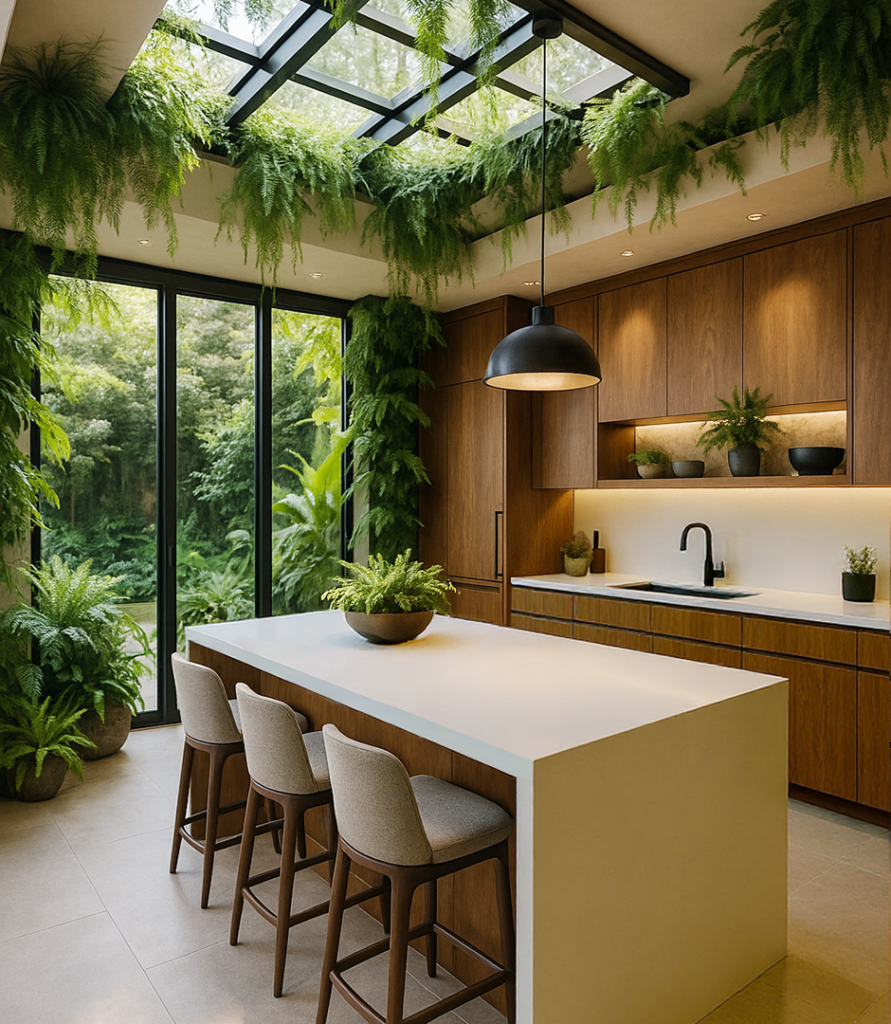
Biophilic Design Kitchen: Complete Beginner Guide
Biophilic Design Kitchen: Complete Beginner Guide
A biophilic design kitchen does more than look pretty. It connects the busiest room in your home to the natural world through light, materials, plants, and shapes that feel inherently familiar. If your kitchen feels sterile, cluttered, or disconnected from the rest of your life, biophilic design offers a practical path forward.
Key takeaways:
- Biophilic design brings nature into your kitchen through daylight, natural materials, plants, organic shapes, and sensory cues.
- You don’t need a full remodel. Herbs, wood accents, earthy paint, and better lighting deliver immediate results.
- Natural materials like wood and stone are durable when sealed and maintained properly.
- Balance aesthetics with practicality: choose pet-safe plants and surfaces that handle heat and moisture.
What Is Biophilic Design?
Biophilic design grows out of the biophilia hypothesis, which suggests humans have an innate need to connect with living things and natural systems. In a kitchen, that translates to natural light, raw textures, greenery, earthy color palettes, and forms that echo the outdoors.
This idea isn’t new. Terrapin Bright Green, an international consulting firm, published a widely used framework called the 14 Patterns of Biophilic Design [1]. It breaks down how spaces can satisfy our biological need for nature, covering everything from visual connections to natural materials to sensory variability. You don’t need to memorize all 14 patterns, but they explain why a wooden cutting board or a sunny windowsill herb garden feels so right.
The kitchen is a natural focal point for these principles. It’s where you cook, eat, gather, and often spend more waking hours than you realize. When that space feels alive and connected to nature, your whole day benefits.
Why Biophilic Kitchens Matter
Health and Well-Being
Research in environmental psychology suggests that nature-inspired spaces can lower stress and improve mood. A classic hospital study by Ulrich found that patients with a view of trees recovered faster than those looking at a brick wall, a result that has shaped modern thinking about design and health [2]. Daylight helps regulate your body’s sleep-wake cycle, which matters when you’re grinding coffee at 6 a.m. or washing dishes after a long evening. Natural textures and greenery offer quiet visual relief from hard, glossy surfaces.
Sustainability and Long-Term Value
Biophilic design aligns naturally with sustainable living. Materials like bamboo, cork, reclaimed wood, and recycled stone reduce environmental impact. Energy-efficient lighting and better ventilation lower utility bills. And because natural materials age gracefully, they need replacing less often than trend-driven finishes. If you are exploring other rooms, see our guide on sustainable kitchen materials for eco-friendly remodeling.
Core Principles of Biophilic Design in a Kitchen
Think of these as your design checklist:
- Natural light: daylighting, layered lighting, and window treatments that welcome the sun rather than block it.
- Natural materials: wood, stone, bamboo, cork, cane, and clay.
- Living elements: herbs, houseplants, or a small living wall.
- Organic shapes: curved edges, rounded cabinet pulls, and irregular forms found in nature.
- Sensory connections: scent from herbs, texture of wood grain, sound of trickling water, and airflow from an open window.
The WELL Building Standard, a leading framework for health-focused building design, includes several of these same principles [3]. That’s a strong signal that biophilic design is more than a passing aesthetic — it’s a meaningful way to improve how a home functions. For ideas in adjacent spaces, browse our biophilic living room ideas to create a consistent natural flow throughout your home.
Suggested read: Modern Kitchen Island Lighting: Complete Beginner Guide
How to Start with Small Changes
You don’t need a renovation budget to begin. These renter-friendly, budget-conscious ideas make an immediate difference:
- Place potted herbs on a windowsill — basil, thyme, and mint are easy wins.
- Swap plastic cutting boards for sealed wood or bamboo.
- Add a natural-fiber rug, like jute or seagrass, under a breakfast table.
- Choose linen or cotton curtains instead of heavy synthetic drapes.
- Paint one wall in an earthy tone: warm white, sage, terracotta, or sand.
- Use wooden utensils, stoneware dishes, and clay mugs for everyday meals.
- Keep a bowl of fresh fruit or a vase of cut flowers on the counter — it’s nature, literally.
These changes layer into a room that feels warmer without requiring a single cabinet replacement. For more low-cost inspiration, see our collection of renter-friendly nature decor ideas.
Deeper Transformations: Upgrading Surfaces and Cabinetry
When you’re ready for a bigger commitment, focus on the surfaces you touch daily.
Cabinetry
Look for wood certified by the Forest Stewardship Council (FSC), which ensures it comes from responsibly managed forests. Bamboo is another solid choice because it grows quickly and regenerates easily.
Countertops
Butcher block adds warmth and works beautifully for prep areas. Sealed stone, such as granite or soapstone, connects the kitchen to the outdoors while standing up to heat and daily wear. Recycled glass and paper composite counters are eco-friendly alternatives that still feel natural.
Flooring
Cork is naturally soft underfoot and renewable. Bamboo is durable and sleek. Reclaimed wood brings character and history. In areas prone to spills, choose moisture-resistant finishes and seal them well.
A full remodel budget varies dramatically, but you don’t have to do everything at once. Prioritize by impact: a natural countertop and a light paint refresh will change the room’s personality more than swapping every cabinet door at once.
Choosing Plants and Herbs for the Kitchen
The best kitchen plants are either useful in cooking or forgiving to care for — ideally both.
- Culinary herbs: Basil, parsley, chives, mint, thyme, and rosemary grow well on a sunny sill. Snip them while cooking and they earn their space.
- Low-maintenance houseplants: Pothos, spider plants, and snake plants tolerate humidity and variable light. The NASA Clean Air Study is often cited in conversations about indoor plants and air purification [4], but the effect in a real home is modest. Plants are mood-boosting and lovely, not a substitute for proper ventilation.
- Pet safety: Before buying anything, verify toxicity. Lilies and several popular houseplants are dangerous to cats and dogs. Pet-friendly options include spider plants, Boston ferns, and herbs like basil and thyme in moderation.
Group plants near windows but away from the stove, where heat and grease can stress them. A small wall-mounted herb planter saves counter space in compact kitchens. Learn more about choosing and caring for greenery in our guide to kitchen-friendly indoor plant care.
Lighting and Air Quality in a Biophilic Kitchen
Natural light is the quickest way to make a kitchen feel connected to the outdoors. Remove heavy window coverings, switch to sheer curtains, or use reflective surfaces. A mirror placed across from a window can bounce daylight into darker corners. For serious changes, skylights or solar tubes open up kitchens that feel boxed in. Our article on maximizing natural light in home design offers more techniques.
Suggested read: Biodegradable Kitchen Sponges: Complete Beginner Guide
When the sun goes down, rely on layered lighting: task lights under cabinets, a warm pendant over the island, and dimmable switches that mimic the natural arc of daylight.
Ventilation matters just as much. A range hood that vents outside clears smoke, grease, and moisture. Open windows whenever the weather allows — moving air and the smell of rain or cut grass are powerful sensory cues for the biophilic brain. Even a small tabletop fountain adds a calming water sound, a pattern that Terrapin Bright Green lists as a known stress reducer [1].
Color Palette and Texture: Creating a Nature-Inspired Kitchen
Forget the all-white kitchen. Nature-inspired palettes draw from the colors of soil, leaves, bark, sand, and sky.
- Walls: warm whites, pale olive, sage, terracotta, or soft clay.
- Cabinetry: natural wood tones, muted green, or deep umber.
- Accents: sandy linens, stone-gray ceramics, bronze or brass hardware.
Texture brings the palette to life. Pair the smooth surface of a stone countertop with the matte warmth of a wooden island. Add a rough woven basket, a ribbed ceramic vase, or a linen runner. Subtle patterns inspired by leaves, wood grain, or flowing water — such as a textural tile backsplash — reinforce the natural feel without shouting for attention.
Common Mistakes to Avoid
- Overcrowding plants: Too many pots turn a calming room into a cluttered greenhouse. Choose a few thriving plants over a crowded collection.
- Ignoring maintenance: Untreated wood absorbs stains and moisture. Seal surfaces properly and be honest about how much care you can realistically give.
- Picking plants without checking conditions: Kitchens fluctuate in heat and humidity. Choose hardy species and keep them clear of direct stove heat.
- Overpromising health benefits: Nature-inspired design supports well-being, but it can’t fix poor air quality. Use your exhaust fan, change filters, and open windows.
- Clashing with your home’s character: Biophilic design works with modern, traditional, farmhouse, and minimalist kitchens alike. The goal is a natural rhythm, not a forced theme. For a related take, see how the same principles apply in a biophilic bedroom design guide.
Frequently Asked Questions
What is biophilic design in a kitchen?
Biophilic design brings natural elements, materials, light, and patterns into your kitchen to create a stronger connection with nature, improving well-being and sustainability.
How do I make my kitchen biophilic on a budget?
Start with potted herbs, natural-fiber rugs, wooden utensils, earthy paint colors, and maximizing natural light through sheer or open window treatments.
What are the best plants for a kitchen?
Herbs like basil, thyme, and mint thrive in kitchens, along with low-maintenance houseplants such as pothos, spider plants, and snake plants. Always verify pet safety before bringing a plant home.
Are natural materials like wood and stone durable enough for kitchens?
Yes, with proper sealing and maintenance. Butcher block and sealed stone withstand regular kitchen use, while bamboo and cork make excellent flooring options when treated appropriately.
Does biophilic design help with mental health?
Research suggests that exposure to nature-like elements can reduce stress and improve mood. A biophilic kitchen can contribute to a calmer and more restorative home environment, though it’s not a replacement for medical care or good ventilation.
Conclusion: Start Small, Think Long-Term
Biophilic design for the kitchen doesn’t require a full renovation or a designer’s budget. It’s about intentional choices: a wooden cutting board instead of plastic, a pot of basil on the sill, a softer light bulb, a greener paint color. Begin with one change — the simplest one you’ll actually keep up with. Over time, those small gestures accumulate into a kitchen that feels alive, functional, and genuinely yours.
Suggested read: Bino's Kitchen Knife: Complete Beginner Guide
Take a look around your kitchen right now. Pick one detail you can change this week, and let that be your first step toward a space that nourishes you as much as your cooking does.
Sources & References
- Terrapin Bright Green. (2014). 14 Patterns of Biophilic Design: Improving Health & Well-Being in the Built Environment. Available at: terrapinbrightgreen.com
- Ulrich, R. S. (1984). View through a window may influence recovery from surgery. Science, 224(4647), 420–421. doi:10.1126/science.6143402
- International WELL Building Institute. (2023). WELL Building Standard. Available at: wellcertified.com
- Wolverton, B. C., Johnson, A., & Bounds, K. (1989). Interior Landscape Plants for Indoor Air Pollution Abatement. NASA/ALCA Report. Note: This preliminary study was conducted in sealed laboratory chambers; real-home air purification effects are modest and do not replace mechanical ventilation.

Author and contributor.
