
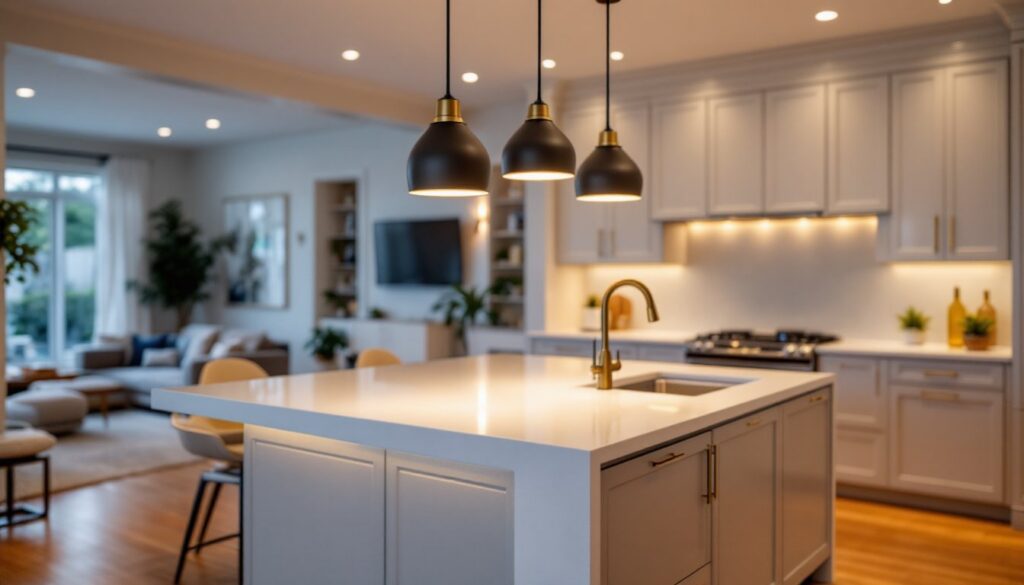
Modern kitchen island lighting combines three essential functions—task lighting for food prep, ambient light for overall brightness, and accent lighting for visual appeal. For most kitchens, 450-800 lumens per pendant fixture provides the right brightness, while layering pendants with recessed or under-cabinet lights creates balanced illumination. LED fixtures offer excellent brightness with low energy costs, and pendant lights remain the most popular choice for style and functionality.
- Three-in-one purpose: Island lighting handles task work, ambient brightness, and visual accent simultaneously
- Optimal brightness: Aim for 450-800 lumens per pendant for effective task illumination
- Layer wisely: Combine pendants with recessed or under-cabinet lights for complete kitchen lighting
- LED efficiency: Modern LED fixtures deliver high lumens while consuming less energy than older bulbs
- Simple installation: Pendants require no prior lighting experience and work in most kitchen layouts
Modern Kitchen Island Lighting: Complete Beginner Guide
Your kitchen island sits at the heart of your home’s busiest room. The right lighting above it transforms how the space looks, how it functions, and how you feel spending time there. Whether you’re cooking, eating breakfast, or gathering with friends, your island lighting sets the mood while helping you see clearly for tasks.
This guide walks you through everything a beginner needs to know. You’ll learn how to choose the right fixtures, get the sizing correct, match styles to your kitchen, and handle installation safely. No prior lighting knowledge required.
Understanding Kitchen Island Lighting Basics
What Does Kitchen Island Lighting Do?
Kitchen island lighting serves three purposes. Task lighting helps you see clearly when chopping vegetables, reading recipes, or doing homework. Ambient lighting contributes to the overall brightness of your kitchen. Accent lighting adds visual interest and highlights your island as a design feature.
Most island fixtures handle task and ambient lighting together. Pendant lights directed downward provide focused task light. The glow they cast outward adds ambient illumination to the surrounding area.
The Layered Lighting Concept
Professional designers recommend layered lighting for kitchens. This means combining different light sources that work together. Your island pendants provide the primary layer. Overhead recessed lights or recessed cans can add general ambient light. Under-cabinet strip lights along nearby cabinets create another layer.
You do not need every layer. A well-chosen pendant or two often provides sufficient illumination for most kitchens. Understanding this concept helps you make smarter choices about what you actually need.
Understanding Lumens and Brightness
Lumens measure how much light a bulb produces. Higher lumens mean brighter light. For kitchen island task lighting, aim for 450 to 800 lumens per fixture. Smaller pendants typically fall in the 450-600 lumen range. Larger statement pendants can reach 800 lumens or more.
Do not confuse lumens with watts. Watts measure energy consumption, not brightness. An LED bulb producing 800 lumens uses far less energy than an older incandescent bulb producing the same amount of light. Modern LED fixtures deliver excellent brightness while keeping energy costs low.
Color Temperature Explained Simply
Color temperature describes the warmth or coolness of light and is measured in Kelvin (K). Lower Kelvin numbers produce warmer, more yellow light. Higher numbers produce cooler, more blue light.
For kitchen islands, most homeowners prefer 2700K to 3000K for a warm, inviting glow that flatters food and faces. If you do detailed food preparation and want brighter, crisper light, 3000K to 4000K works well. Avoid anything above 4000K in living spaces, as it can make kitchens feel clinical and cold.
Types of Modern Kitchen Island Lighting
Pendant Lights
Pendant lights hang from a single cord, chain, or rod from the ceiling. They direct light downward, making them ideal for task illumination over islands and breakfast bars. Single pendants work well over smaller islands. Multiple pendants spaced along a larger island provide even coverage.
Suggested read: Biodegradable Kitchen Sponges: Complete Beginner Guide
Pendants come in countless styles, from minimalist glass spheres to industrial metal cages to sleek geometric shapes. They suit nearly every modern kitchen aesthetic.
Multi-Light Chandeliers
Multi-light chandeliers feature several bulbs on a single frame. They create a striking visual statement while providing substantial light output. These work particularly well over longer islands where you want one fixture to make a bold design impact rather than several smaller pendants.
Look for adjustable canopy kits that allow you to center the fixture over your island regardless of where your electrical box sits.
Linear Suspensions
Linear suspensions feature multiple lights arranged in a straight line. They span the length of your island, providing even illumination without the visual complexity of several individual pendants. Linear fixtures complement long, rectangular islands especially well.
Modern linear suspensions range from ultra-minimalist designs with exposed bulbs to more elaborate frames with sculptural elements.
Track Lighting Systems
Track lighting consists of a rail mounted to the ceiling with adjustable heads that can be repositioned along the track. This offers flexibility if you want to redirect light or add fixtures later. Track heads can highlight different areas of your island for various activities.
However, track lighting often appears more utilitarian than decorative. For purely aesthetic purposes, pendants or linear suspensions typically look more intentional in modern kitchens.
How to Size Kitchen Island Lighting
The Two-Thirds Rule for Fixture Width
Your fixtures should span approximately two-thirds of your island’s length. For a six-foot island, look for fixtures totaling about four feet in width. This proportion feels balanced without overwhelming the space or appearing too small.
This is a guideline, not a strict rule. If your island sits in a smaller kitchen, slightly smaller fixtures may look better. In a grand open-plan space, you might prefer fixtures that approach three-quarters of the island length.
Proper Hanging Height
Install your pendants so the bottom of each fixture hangs 30 to 36 inches above the countertop surface. This height provides clear sightlines across the island while positioning light where you need it for tasks. It also keeps fixtures safely out of the way during normal kitchen activities.
If your ceiling is unusually low or high, adjust accordingly. In a kitchen with 8-foot ceilings, 30 to 34 inches typically works well. With 10-foot ceilings, you can go up to 36 inches or even slightly higher without the light feeling disconnected from the space.
Spacing Multiple Fixtures
When using more than one pendant, space them 24 to 30 inches apart from center to center. This spacing prevents gaps in illumination while keeping fixtures visually distinct rather than blending together.
Suggested read: Biophilic Design Kitchen: Complete Beginner Guide
To calculate positioning, subtract the total width of your fixtures from your island length. Divide the remainder by the number of gaps between fixtures. This gives you exact spacing for even distribution.
For example, a 72-inch island with three 10-inch-wide pendants leaves 42 inches of space to distribute across the four gaps between and around the fixtures.
Choosing the Right Style
Modern kitchen island lighting encompasses several distinct aesthetics. Industrial fixtures feature exposed hardware, metal finishes, and utilitarian shapes. Minimalist pendants offer clean lines, simple forms, and understated elegance. Transitional styles blend traditional elements with contemporary sensibilities.
Match your fixture finish to other hardware in your kitchen. If your cabinet pulls are brushed nickel, consider pendants in the same or complementary finish. Matte black fixtures create dramatic contrast in light-colored kitchens. Brass and gold finishes add warmth and sophistication.
Your island lighting should complement your overall kitchen design rather than competing with it. A single bold pendant makes a statement in a simple kitchen. Multiple subtle pendants allow your cabinets and countertops to take center stage in a more elaborate design.
Installation Essentials
Before purchasing fixtures, check that your ceiling can support them. Standard electrical boxes support fixtures up to 50 pounds. Heavier chandeliers or multiple pendants on a single junction box may require a ceiling fan-rated box or additional support.
For plug-in pendants and simpler installations, confident DIYers can often handle the work. However, any hardwired installation involving new circuits, moving electrical boxes, or working with older wiring warrants a licensed electrician. Electrical work must meet local building codes for safety.
Consider adding dimmer switches. Dimmers allow you to adjust brightness based on the time of day and activity. Not all LED fixtures are dimmer-compatible, so verify this before purchasing. Look for fixtures listed as dimmable and pair them with compatible dimmer switches designed for LED loads.
Ensure any lighting fixture you purchase carries safety certifications from recognized testing laboratories. These certifications indicate the product has been tested for electrical and fire safety.
Budget and Where to Shop
Quality kitchen island lighting spans a wide price range. Individual pendant lights range from under $50 for basic models to $500 or more for designer fixtures. Linear suspensions and multi-light chandeliers typically start around $150 and can exceed $1,000 for premium brands.
At lower price points, focus on construction quality. Check that canopies cover ceiling openings cleanly. Examine how pendants are assembled. Read customer reviews about durability and light output.
Major home improvement stores offer good selection at moderate prices. Lighting specialty retailers provide more design-forward options and often include detailed specifications. Online marketplaces offer the widest variety but check return policies before purchasing.
Suggested read: Bino's Kitchen Knife: Complete Beginner Guide
Set a realistic budget based on how long you plan to stay in your home. If you expect to move within a few years, mid-range fixtures make sense. For a long-term home, investing in fixtures you truly love often pays off in daily satisfaction.
Conclusion
Choosing kitchen island lighting comes down to a few key decisions. Pick fixtures sized appropriately for your island using the two-thirds rule. Hang them 30 to 36 inches above the counter. Choose a style that complements your kitchen’s existing aesthetic. Budget for quality you can live with comfortably.
Remember that you can upgrade lighting more easily than you can change your kitchen layout. Take your time with this decision. The right island lighting will serve your home beautifully for years to come.
Frequently Asked Questions
How high should kitchen island pendant lights hang?
Kitchen island pendant lights should hang 30 to 36 inches above the countertop surface. This height provides optimal task lighting while keeping fixtures at a comfortable eye level. Adjust slightly based on your ceiling height and personal preference.
How do I calculate how many pendant lights I need for my kitchen island?
Space pendants 24 to 30 inches apart from center to center. The total width of all your fixtures should equal approximately two-thirds of your island’s length. A 72-inch island typically works well with three pendants spaced evenly across its span.
What color temperature is best for kitchen island lighting?
A color temperature of 2700K to 3000K produces warm, inviting light that flatters kitchens and dining areas. Choose 3000K to 4000K if you prefer brighter, crisper task lighting for detailed food preparation.
How many lumens do I need for kitchen island lighting?
Aim for 450 to 800 lumens per fixture depending on the size of the pendant and your lighting goals. Larger pendants can provide more lumens. If your island serves primarily as a gathering space rather than a work surface, fewer lumens may suffice.
Can I install kitchen island lighting myself?
Simple plug-in fixtures or battery-operated pendants can be DIY projects. Hardwired installations involving new wiring, electrical box modifications, or working with existing electrical systems should be handled by a licensed electrician to ensure safety and code compliance.
Glossary of Common Terms
Lumens: A measure of total light output. Higher lumens mean brighter light.
Kelvin (K): A unit measuring color temperature. Lower Kelvin numbers indicate warmer light; higher numbers indicate cooler light.
CRI (Color Rendering Index): A measure of how accurately a light source reveals colors. Higher CRI values (above 80) produce more accurate color representation.
Canopy: The decorative plate that covers the ceiling mounting point where the fixture attaches.
Suggested read: Drop In Kitchen Sinks Pricing: Complete Beginner Guide
Dimmable: Fixtures compatible with dimmer switches, allowing you to adjust light levels.
ETL/UL Listed: Safety certifications indicating a product has been tested by an accredited laboratory and meets safety standards.
Sources & References
- Source: The Lighting Research Center at Rensselaer (research)
Premier research institution for lighting technology providing authoritative information on color temperature, lumens, and residential lighting applications. Supports color temperature recommendations for kitchen spaces. - Source: Color Temperature and Kitchen Lighting: What You Need to Know (documentation)
Lutron (lighting controls manufacturer) technical documentation explaining color temperature preferences for kitchens and how different Kelvin ranges affect food presentation and ambiance.

Author and contributor.
