
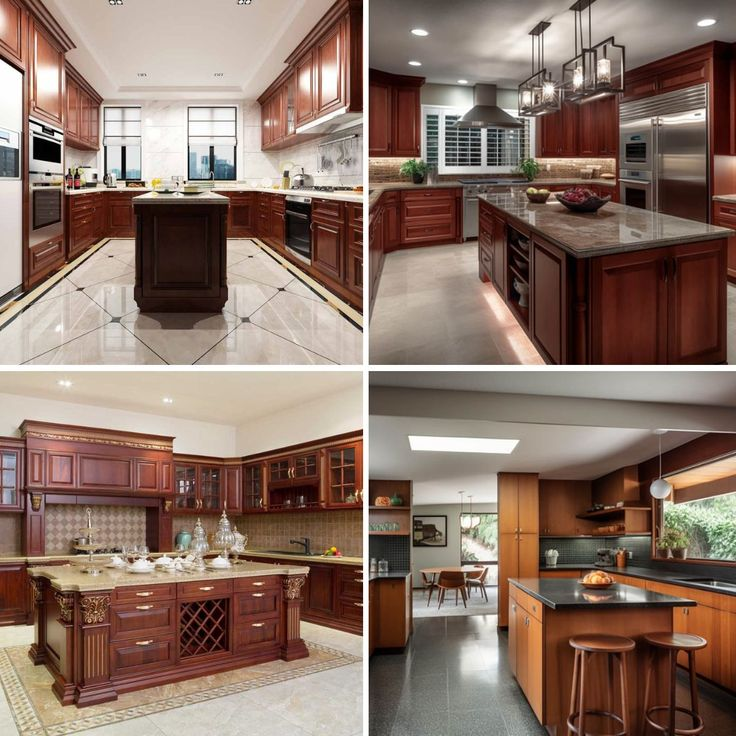
Hardware for Cherry Kitchen Cabinets: Selecting Styles and Finishes
Cherry cabinets bring a warm, reddish-brown tone to a kitchen, and that color is the single biggest factor in how hardware will look once installed. The right knob or pull can make cherry look richer; the wrong finish can make it look muddy or dated. This article covers the practical decisions—style, finish, function, and durability—to help you narrow the field before buying.
Start With the Four Factors Together
When choosing kitchen cabinet hardware, the most reliable approach is to weigh style, function, finish, and durability together rather than treating them as separate decisions [1]. That matters more with cherry than with a painted cabinet, because cherry's color is doing a lot of visual work already.
A practical way to apply that:
- Style should relate to the cabinet door profile and the rest of the kitchen, not to a trend seen in isolation.
- Function means the hardware has to be comfortable to grab and appropriate for the door or drawer it's mounted on.
- Finish has to sit next to cherry without fighting it.
- Durability determines whether the finish still looks right after years of daily contact.
If you optimize only for finish and ignore function, you'll often end up with a pull that looks correct in a photo but is awkward in daily use. If you optimize only for function, you may end up with something that visually clashes.
How Cherry's Color Interacts With Hardware Finishes
Cherry is a warm wood with red and orange undertones. The practical consequence is that hardware finishes with their own strong warm cast can either harmonize or compete, depending on how much contrast you want.
A useful way to think about it:
Choosing finishes for cherry cabinets
- Compare several finish samples against your actual cherry cabinet color in your kitchen lighting before deciding.
- Ask the hardware maker or retailer for finish samples, and check how each finish is cared for.
- If you want a coordinated look, choose a finish after seeing it next to your cabinets, not from a photo alone.
Finishes that sit in between
- Brushed or satin brass
- Champagne bronze and similar softened gold tones
These are visual judgments, not specifications, and the result depends heavily on your specific cabinet color, lighting, and floor. The reliable move is to order a single sample in two or three candidate finishes and hold them against an actual door in your actual kitchen light—including at night, when artificial lighting changes how warm finishes read.
One caution: cherry cabinets vary. Natural cherry darkens with age and light exposure, and stained cherry can be anything from pale amber to deep mahogany. A finish that works against a light natural cherry door may look entirely different against a dark stained one. Judge against your own door, not a showroom sample of a different cherry.
Choosing Knobs vs. Pulls
The knob-versus-pull decision is usually driven by door and drawer type rather than aesthetics.
- Drawers: consider how you grip the drawer front, and test whether a pull or knob feels comfortable in your hand.
- Doors: consider the door size and weight, and choose the option that gives you a comfortable grip.
- Small doors: test both a knob and a pull on the actual door before deciding.
A common and workable approach is to use knobs on doors and pulls on drawers, which keeps the visual rhythm consistent while matching the mechanics of each opening. Another approach is to use pulls everywhere for a more uniform, contemporary look.
Suggested read: How to Care for a Cherry Wood Cutting Board
Whatever you choose, confirm the mounting position before you commit. Hardware placement on a drawer front or door stile affects both appearance and how the piece feels to open, and the manufacturer's guidance on measuring and installing hardware is the place to check the specifics for your chosen product [2].
Matching Finish Across the Kitchen
Hardware rarely lives alone. It sits near faucets, lighting, appliance handles, and cabinet hinges. You don't have to match everything perfectly, but you do need a deliberate relationship between them.
Two workable strategies:
Match the family. Keep all hardware in one finish family—for example, all oil-rubbed bronze—and let the faucet and lighting either match or sit in a clearly related tone.
Mix with intent. Use one dominant finish and one accent. A common version is dark bronze cabinet hardware with a stainless or chrome faucet. This works when the accent finish appears more than once in the room, so it reads as a choice rather than an accident.
What tends to look unintentional is three or more unrelated metal finishes with no clear hierarchy.
Durability: What Actually Matters Over Time
Durability is one of the four factors that should drive the decision, alongside style, function, and finish [1]. In practice, durability shows up in a few ways:
- Finish wear at the touch point. The spot your hand contacts most often is where a finish will show wear first. Dark finishes on high-traffic pulls can wear to a lighter base metal over time.
- Coating quality. Some finishes are applied over a base metal and some are solid. The manufacturer's product information is the place to check what the finish actually is.
- Construction and mounting. A pull that loosens or spins is a durability problem regardless of how good the finish looks.
Because finish formulations and product lines change, treat any specific durability claim as something to verify against the current manufacturer or retailer listing rather than assuming it carries over from an older version of the same product.
Practical Limitations to Plan Around
A few things routinely trip people up:
You can't judge finish from a screen. Monitor calibration, product photography lighting, and your kitchen's lighting all distort metal finishes. Order physical samples.
Cherry changes. If your cabinets are natural cherry, their color will shift over time with light exposure. Hardware chosen against a brand-new door may look different against the same door in a few years. This is a reason to favor finishes that work across a range of cherry tones rather than a finish that depends on one exact shade.
Sample quantities and returns vary. Sample programs, return windows, and restocking policies differ by retailer and change over time. Check the current policy on the retailer's site before ordering a batch of samples or a full set.
Suggested read: Rustic Kitchen Cabinets: How to Get That Warm, Cozy Look Without Breaking the Bank
Package contents vary. What's included with a knob or pull—screws of what length, in what quantity—differs by product and brand. Verify the current listing rather than assuming.
Availability and pricing move. Hardware lines get discontinued, finishes get retired, and prices change. Confirm the current price, stock status, and finish availability on the manufacturer's or retailer's site before you commit to a full kitchen's worth.
A Workable Selection Process
1. Photograph your cabinets in daylight and at night. Note the actual color range you're working with. 2. Identify your cabinet door style. Shaker, raised panel, flat slab, and beadboard each pair differently with hardware shapes. 3. Pick two or three candidate finishes. One harmonious, one high-contrast, and optionally one in between. 4. Order single samples. Hold them against a real door in real light. 5. Decide knob versus pull by opening type, not by photo. 6. Check the manufacturer's measuring and installation guidance for your chosen hardware before drilling anything [2]. 7. Confirm current price, availability, included hardware, and finish options on the live listing before ordering the full set.
Quick Reference: Finish Direction by Goal
| If you want… | Consider… | Trade-off | |—|—|—| | A warm, cohesive look | Oil-rubbed bronze, antique brass, bronze tones | Lower contrast; can read as traditional | | A crisp, modern look | Matte black, satin nickel, chrome | High contrast against cherry's warmth | | A transitional look | Brushed brass, champagne bronze, satin nickel | Finish availability varies by line | | A traditional look | Antique brass, dark bronze, cup pulls | Can feel heavy on minimal door styles |
These are directional starting points, not rules. The only reliable test is a physical sample against your own cabinet door.
Sources
1. MasterBrand — Choosing cabinet knobs, pulls and hinges: https://www.masterbrandcabinets.com/get-started/design-your-room/how-to-choose-cabinet-hardware 2. Amerock — Hardware finish matrix and measurement resources: https://news.amerock.com/blog/the-best-of-amerock-collection

Author and contributor.
