
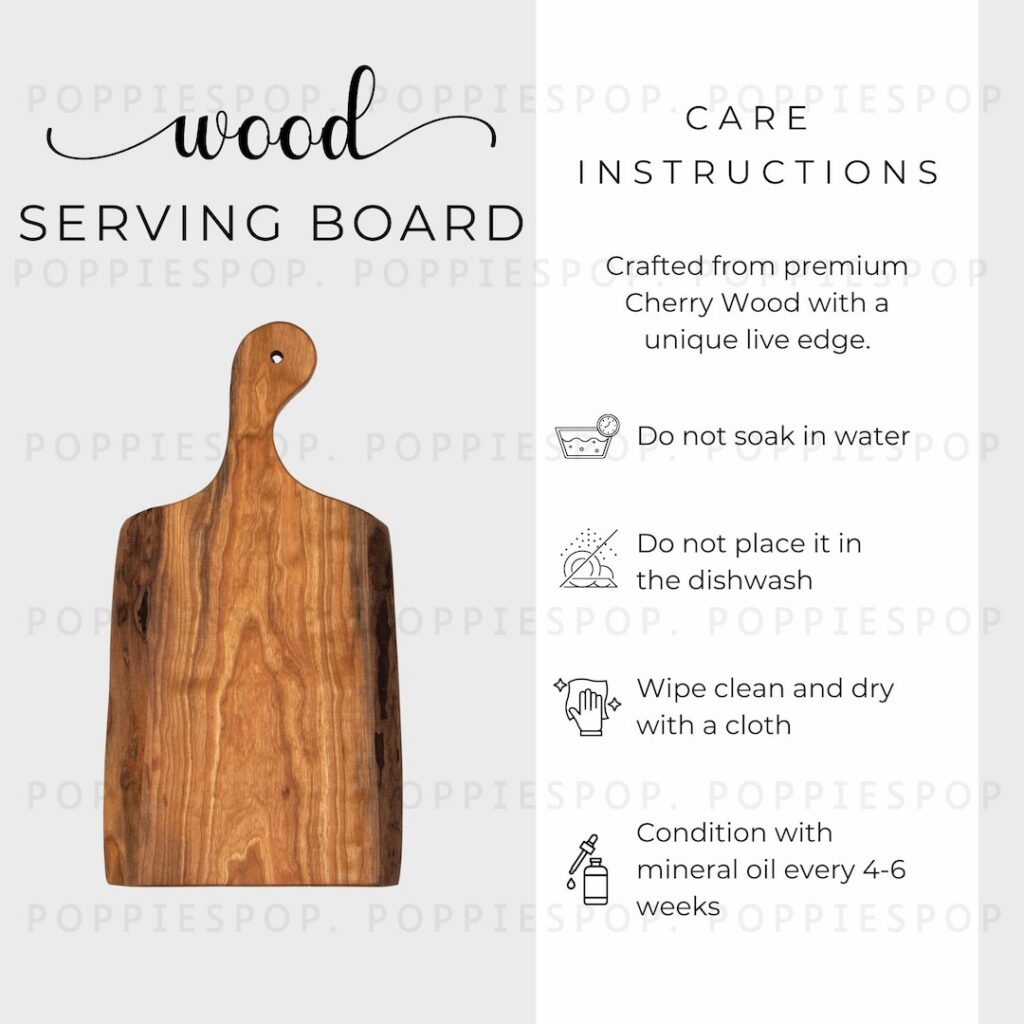
How to Care for a Cherry Wood Cutting Board
Cherry wood cutting boards are valued for their warm color and fine grain. This article covers a basic care routine based on established methods for wooden boards, with clear limits on what you should and shouldn't do.
Start With a Quick Identification Check
Before you commit to any care routine, confirm what you actually have. "Cherry wood cutting board" can mean:
- Solid cherry, edge-grain or end-grain
- Cherry-faced board over a different core wood
- Cherry-stained or cherry-colored wood that isn't cherry at all
- A board with a factory finish — oil, wax, varnish, or a proprietary blend
This matters because the finish determines what you can safely apply later. If the board came with a card, tag, or product page, read it first and follow those directions over any general advice. A manufacturer's instructions for a specific board take priority over generic wood-care guidance [1].
If you don't have the paperwork, contact the maker before applying anything, and follow their care instructions. For routine cleaning, wipe the surface with a clean cloth and a mild soap-and-water solution, then dry it immediately with a clean towel. [1][2]
Daily Cleaning: Simple and Fast
The core daily routine is short.
1. Scrape off food residue with a bench scraper or the back of a knife. 2. Wipe the surface with a clean cloth and a mild soap-and-water solution until debris is gone. 3. Dry the board immediately with a clean towel. [1][2]
That third step is the one people skip, and it's the one that matters most for wood. Wood absorbs water, and a board left wet — or left to air-dry on a counter — holds moisture longer than it needs to. Drying it by hand with a towel reduces that moisture retention [2].
A few practical notes:
- Don't soak it. No dishwashers, no sinks full of water, no leaving it to stand in a puddle.
- Don't use harsh or abrasive cleaners unless the board's maker specifically says otherwise. Mild soap is the standard for wooden boards [1].
- Wash both sides when you wash at all.
- Dry it standing on edge if you're putting it away immediately after toweling, so air can reach both faces.
What About Raw Meat and Poultry?
If you've cut raw meat, poultry, or fish on the board, clean it thoroughly right away rather than letting residue sit. The mild soap-and-water wipe followed by immediate towel drying is the baseline. [1][2]
How Often to Oil a Cherry Board
Oiling is where most cherry board owners either overdo it or underdo it.
The honest answer: the right oiling schedule depends on the board's finish and how much you use it. There is no universal interval that applies to every cherry board. What you can do is watch the wood.
Signs a board may benefit from oil:
Suggested read: Best Hardware for Cherry Kitchen Cabinets: How to Choose Styles and Finishes That Work Together
- The surface looks pale or chalky compared to how it looked when new
- Water beads less and soaks in faster
- The board feels dry to the touch rather than slightly satiny
- Light scratches look white or gray instead of blending in
If you see those signs, that's your cue. If the board still looks rich and feels smooth, there's no need to oil on a calendar.
Important limit: if your board has a film finish (varnish, lacquer, polyurethane, or a hard factory coating), oiling is not the right maintenance step. Oil won't penetrate a sealed surface, and applying it can leave a sticky film. Check the maker's care instructions for that specific board before oiling [1].
Choosing an Oil
Food-grade mineral oil is the conventional choice for wooden cutting boards because it's inexpensive, odorless, and doesn't go rancid. Some makers also sell proprietary board conditioners that combine oil and wax. If you use a branded conditioner, follow that brand's directions — a product made for one manufacturer's boards isn't automatically the right choice for another's.
Avoid oils that can turn rancid in the wood, such as unrefined nut or vegetable oils. And avoid "tung oil" or "linseed oil" products unless you've confirmed they're food-safe formulations intended for cutting surfaces — many hardware-store versions are not.
How to Apply Oil
A workable method:
1. Make sure the board is clean and completely dry. 2. Apply a thin coat of food-grade mineral oil with a clean cloth or paper towel. 3. Let it sit for a period of time so the wood can absorb what it will. 4. Wipe off any oil that hasn't absorbed. Excess oil left on the surface attracts dust and feels greasy. 5. Let the board rest before using it again.
The specific resting time varies by board, thickness, and how dry the wood is. If your board came
{“@context”:”https://schema.org”,”@type”:”Article”,”headline”:”How to Care for a Cherry Wood Cutting Board”,”about”:”how to care for a cherry wood cutting board”,”isAccessibleForFree”:true}

Author and contributor.
