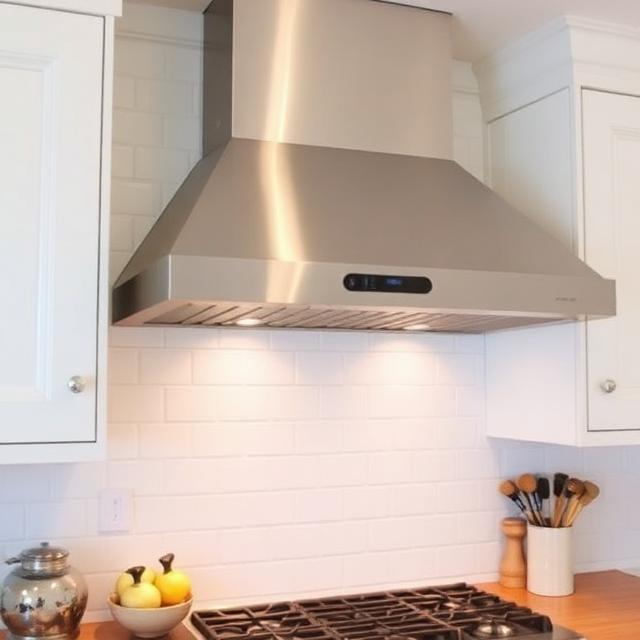
If you’ve been searching for a ventilation solution that actually works without ripping apart your walls or ceiling, kitchen ductless range hoods might just be the answer you didn’t know you needed. These clever appliances have quietly become one of the most popular kitchen upgrades of the last few years — and for good reason. They’re flexible, surprisingly effective, and way less of a headache to install than traditional ducted systems.
Whether you’re renting an apartment, renovating a condo, or simply tired of dealing with lingering smoke and cooking odors, this post covers everything you need to know about ductless range hoods for your kitchen — from how they actually work, to what features matter most, to the top models worth your money right now.
What Are Kitchen Ductless Range Hoods? {#what-are-kitchen-ductless-range-hoods}
Kitchen ductless range hoods — also known as recirculating range hoods — are ventilation appliances designed to filter cooking fumes, smoke, grease, and odors from your kitchen air without needing to vent that air outside through ductwork. Instead of expelling air outdoors, they pull in contaminated air, pass it through a series of filters (typically a combination of grease filters and activated carbon/charcoal filters), and then recirculate the cleaned air back into your kitchen.
This is the fundamental distinction that makes them so incredibly practical. Traditional range hoods require a physical duct pathway — through walls, cabinets, or ceilings — that connects to the outside. That’s a serious construction project. Ductless range hoods skip all of that entirely. You mount the hood above your cooktop, plug it in (or wire it), and you’re basically done.
The term “ductless” is sometimes used interchangeably with “recirculating” or “filterless ducted” in some markets, but in the U.S. and most international markets, ductless almost universally refers to the recirculating type. These hoods come in a huge variety of styles — wall-mounted chimney hoods, under-cabinet hoods, island hoods, and even microwave combo units — so no matter your kitchen layout, there’s almost certainly a ductless option that fits.
Key entities associated with kitchen ductless range hoods:
- Activated carbon/charcoal filters
- Grease mesh filters (aluminum or stainless steel)
- CFM (Cubic Feet per Minute) — the airflow rating
- Recirculating ventilation
- Kitchen air quality
- Cooktop ventilation
- HVAC-free installation
According to the U.S. Environmental Protection Agency (EPA), indoor air can be 2–5x more polluted than outdoor air, and cooking is one of the biggest contributors to indoor air pollution. A quality range hood — even a ductless one — can dramatically reduce particulate matter, volatile organic compounds (VOCs), and carbon monoxide buildup in your kitchen. Source: EPA Indoor Air Quality
How Do Ductless Range Hoods Work? {#how-do-ductless-range-hoods-work}
Understanding the mechanics behind ductless kitchen range hoods helps you appreciate why filter quality matters so much and why some budget models fall flat. Here’s a step-by-step breakdown of the process:
Step 1: Air Intake
When you turn on your ductless range hood, the built-in fan (or fans, depending on the model) creates suction that draws air upward from your cooktop. This includes smoke, steam, grease particles, and airborne odor molecules.
Step 2: Grease Filtration
The first line of defense is the grease filter — typically a mesh screen made from aluminum or stainless steel. This physical filter captures grease droplets and larger particles before they can get into the motor or the carbon filter. Most grease filters are dishwasher-safe, which makes cleaning them pretty painless.
Step 3: Carbon/Charcoal Filtration
This is the stage that actually handles odors. The air passes through an activated carbon filter (sometimes called a charcoal filter), where porous carbon material adsorbs odor molecules — meaning the molecules literally bond to the carbon surface and get trapped there. Good activated carbon filters can neutralize cooking smells from fish, garlic, curry, burnt food, and more.
Step 4: Recirculation
After passing through both filters, the now-cleaner air gets pushed back into the kitchen through vents or openings in the hood. The whole cycle happens continuously while the hood is running.
Important note: Ductless hoods do NOT remove heat or steam from your kitchen the same way a ducted hood does. They clean the air, but the warmth and moisture from cooking remain in the room. This is worth keeping in mind if you do a lot of high-heat cooking.
Ductless vs. Ducted Range Hoods: What’s the Real Difference? {#ductless-vs-ducted}
This is probably the most common question people have when shopping for kitchen ventilation. Let’s break it down clearly:
Suggested read: Cherry Kitchen Cabinets: Everything You Need to Know Before You Buy
| Feature | Ductless Range Hood | Ducted Range Hood |
|---|---|---|
| Installation complexity | Low — no ductwork needed | High — requires duct pathway |
| Installation cost | $0–$200 (mostly DIY) | $200–$1,500+ (often needs contractor) |
| Air quality improvement | Good (filters odors & grease) | Excellent (removes all contaminants) |
| Moisture/heat removal | ❌ No | ✅ Yes |
| Rental/apartment friendly | ✅ Yes | ❌ Rarely |
| Filter replacement needed | ✅ Yes (carbon filters) | ❌ No carbon filters needed |
| Noise level | Varies (30–65 dB) | Varies (40–70 dB) |
| Long-term cost | Filter replacement ongoing | Lower maintenance costs |
| Flexibility/portability | High | Low |
Bottom line: If you can duct, ducted systems win on pure performance. But for the millions of people living in apartments, condos, older homes, or situations where ductwork isn’t possible, kitchen ductless range hoods are not a compromise — they’re the right tool for the job.
Top Benefits of Kitchen Ductless Range Hoods {#top-benefits}
Let’s talk about why so many homeowners and renters are choosing ductless ventilation for their kitchens. The advantages go well beyond just “it’s easy to install.”
1. No Ductwork = Massive Cost Savings
Installing ductwork in an existing kitchen can cost anywhere from $300 to $2,000 or more depending on your home’s layout, the distance to an exterior wall, and local labor rates. A ductless range hood installation, by contrast, can be a simple weekend DIY project. You save on labor, materials, and the headache of opening up walls.
2. Works in Any Kitchen
Island kitchens. Galley kitchens. Studio apartments. Basement kitchens. Rooms on interior walls with no exterior access. Ductless range hoods work beautifully in situations where a ducted solution would be impractical or outright impossible.
3. Renter-Friendly
If you’re renting, modifying the structure of your apartment to run ductwork is almost certainly a violation of your lease. Ductless kitchen range hoods let you enjoy proper kitchen ventilation without touching a single wall. When you move out, you take it with you.
4. Reduces Indoor Air Pollutants
A 2019 study published in Environmental Science & Technology found that gas stoves can emit nitrogen dioxide (NO₂) at levels that exceed outdoor air quality standards — often within minutes of cooking. Even electric cooking generates particulate matter and VOCs. A well-functioning ductless hood with quality carbon filters catches a significant portion of these pollutants before you breathe them in.
5. Sleek, Modern Designs
Today’s ductless range hoods come in gorgeous stainless steel finishes, matte black, white, glass, and more. Many models are genuinely beautiful design statements. Brands like ZLINE, Cosmo, Hauslane, and Broan offer ductless options that look just as premium as their ducted counterparts.
6. Quieter Than You Think
Early ductless hoods had a reputation for being loud. Modern models have improved dramatically — many operate at 45 dB or less on their lowest settings, which is roughly the sound level of a quiet library or a low conversation. Some premium models clock in at under 40 dB.
7. Energy Efficient
Because ductless hoods recirculate air rather than exhausting conditioned (heated or cooled) air outdoors, they don’t create the pressure imbalance and air loss that ducted hoods do. In climates where HVAC costs are high, this can actually save you money on your energy bill over time.
What to Look for When Buying a Ductless Range Hood {#what-to-look-for}
Shopping for the right ductless range hood for your kitchen can feel overwhelming with so many options. Here are the key specs and features you should evaluate before clicking “add to cart.”
CFM Rating (Airflow Power)
CFM — Cubic Feet per Minute — is the single most important specification for any range hood. It tells you how much air the hood can move per minute. For ductless hoods, the general guideline is:
- Under 200 CFM: Light use, small kitchens, electric cooktops only
- 200–400 CFM: Most residential kitchens, average cooking frequency
- 400–600 CFM: Frequent cooking, gas ranges, larger kitchens
- 600+ CFM: Heavy cooking, commercial-style ranges, open-plan spaces
Pro tip: ASHRAE (American Society of Heating, Refrigerating and Air-Conditioning Engineers) recommends a minimum of 100 CFM per linear foot of cooktop for residential kitchen ventilation. So a 30-inch (2.5 ft) range would ideally need at least 250 CFM.
Filter Quality and Type
Not all activated carbon filters are created equal. Look for:
- Thick, dense carbon filters over thin, sparse ones
- Replacement availability — can you easily buy new filters?
- Dual-layer filtration (grease mesh + carbon) vs. single-layer
- Nano-silver or HEPA-enhanced filters in premium models for better particulate capture
Noise Level (Sone or dB Rating)
Lower is better. Here’s a quick reference:
| Noise Level | What It Sounds Like |
|---|---|
| 1–2 Sones (≈40–50 dB) | Quiet refrigerator hum |
| 3–4 Sones (≈51–60 dB) | Normal conversation |
| 5–6 Sones (≈61–65 dB) | Busy office noise |
| 7+ Sones (≈66+ dB) | Loud — hard to hold a conversation |
Size and Coverage
Your ductless range hood should be at least as wide as your cooktop, and ideally 6 inches wider on each side for maximum capture. Standard sizes are 24″, 30″, 36″, and 48″. Island hoods often run larger.
Fan Speeds
Most ductless hoods offer 3 fan speeds; premium models offer 4–6. More speed options give you finer control over noise vs. power.
Suggested read: Outdoor Kitchen Sink: Everything You Need Before You Buy (2025)
LED Lighting
Almost all modern ductless range hoods include built-in LED cooktop lighting. Look for warm or adjustable color temperature LEDs — they make your food look better while cooking and provide useful task lighting.
Build Quality and Materials
Stainless steel (18-gauge or thicker) is the gold standard. Cheaper hoods use thin stamped steel or painted aluminum that can warp, rust, or dent. Check customer reviews for reports of rattling, flex, or poor fit.
Control Type
- Mechanical push-button: Simple, durable, reliable
- Touch controls: Sleek but can be finicky
- Gesture/voice control: Found on premium smart hoods
Best Kitchen Ductless Range Hoods in 2025 {#best-hoods}
Here’s a curated comparison of top-performing ductless range hoods for kitchens across different budgets and styles:
| Model | CFM | Width | Style | Price Range | Best For |
|---|---|---|---|---|---|
| Broan-NuTone 413004 | 190 CFM | 30″ | Under-cabinet | $80–$120 | Budget, renters |
| Cosmo 5MU30 Under Cabinet | 200 CFM | 30″ | Under-cabinet | $100–$160 | Apartments, compact kitchens |
| HAUSLANE Chef Series PS18 | 860 CFM* | 30″ | Wall chimney | $200–$350 | Mid-range, gas ranges |
| ZLINE KB-36 | 400 CFM | 36″ | Wall chimney | $350–$550 | Style-forward kitchens |
| Cosmo COS-63190S | 380 CFM | 30″ | Wall chimney | $180–$280 | Best value wall mount |
| Winflo W101C30 | 400 CFM | 30″ | Under-cabinet | $130–$200 | Mid-budget, reliable |
| Cavaliere SV218B2-36 | 900 CFM* | 36″ | Island | $500–$800 | Open kitchens, islands |
| Fotile JQG7501 | 1,200 CFM* | 30″ | Wall chimney | $800–$1,200 | Premium, high-performance |
*Note: These models are convertible to ductless with filter kits; CFM may vary slightly in recirculating mode.
Editor’s Pick: ZLINE KB-36
If you’re looking for the sweet spot between looks, performance, and value, the ZLINE KB-36 is hard to beat. It’s built from commercial-grade stainless steel, runs surprisingly quiet at around 50 dB on its highest setting, and the carbon filter kit is readily available. It converts easily between ducted and ductless modes, which gives you flexibility if you ever renovate. The 6-speed motor and LED lighting are premium touches you wouldn’t expect at this price point.
Budget Pick: Cosmo COS-63190S
For anyone on a tighter budget who still wants a proper wall-mount chimney look, the Cosmo COS-63190S delivers way more than its price suggests. Reviews consistently praise its motor power, the quality of the stainless finish, and how easy it is to install. The carbon filter kit is inexpensive and widely available online.
Installation Tips for Ductless Range Hoods {#installation-tips}
One of the biggest selling points of kitchen ductless range hoods is how straightforward the installation process is — especially compared to ducted systems. That said, there are a few things that can trip people up if they’re not prepared.
Mounting Height Matters
The standard recommendation is to mount your range hood 24–30 inches above an electric cooktop and 28–36 inches above a gas cooktop. Too close, and the hood gets damaged from heat exposure. Too far, and it loses capture efficiency dramatically.
Check Your Electrical Requirements
Most residential ductless hoods run on standard 120V household current and simply plug into an outlet — or can be hardwired for a cleaner look. A few higher-CFM models require a dedicated circuit. Check the spec sheet before you buy.
Make Sure the Carbon Filter Kit Is Installed
This sounds obvious, but a surprising number of people mount their ductless hood and forget to install the activated carbon filter insert. Without it, the hood just blows greasy air around your kitchen instead of filtering it. Always confirm the carbon filter kit is included or order it separately before installation.
Secure Mounting is Non-Negotiable
Range hoods are heavy — especially stainless steel chimney hoods. You need to mount into wall studs or use proper toggle bolts rated for the weight. Use a stud finder before you drill anything. A poorly mounted hood that falls is a serious safety hazard.
Level It Before Tightening
Use a small bubble level when positioning the hood. An unlevel installation is not just cosmetically annoying — it can affect airflow and cause grease to pool unevenly in the filter tray.
Maintenance: Keeping Your Ductless Hood Running Smoothly {#maintenance}
The biggest difference in long-term ownership between a ducted and ductless kitchen range hood is the need to replace carbon filters regularly. Here’s what a solid maintenance routine looks like:
Grease Filter Cleaning (Every 1–3 Months)
- Remove the mesh grease filter(s)
- Soak in hot water with dish soap or degreaser for 15–20 minutes
- Scrub gently with a soft brush
- Let dry completely before reinstalling
- Most are dishwasher safe — top rack, hot cycle
Carbon Filter Replacement (Every 3–6 Months)
Activated carbon becomes saturated over time and loses its ability to adsorb odors. There’s no way to fully restore a spent carbon filter by cleaning it. You need to replace it entirely. Replacement filters typically cost $15–$50 depending on the model.
Signs your carbon filter needs replacing:
- Cooking odors linger longer than usual after cooking
- The hood seems less effective at clearing smoke
- It’s been more than 6 months since the last replacement
Fan Blade Cleaning (Every 6–12 Months)
Grease can build up on the fan blades over time, reducing efficiency and potentially causing motor strain. A damp cloth with a mild degreaser works well — just make sure the unit is unplugged before you reach inside.
Suggested read: No 1 Chinese Kitchen: Everything You Need to Know Before You Order
LED Bulb Replacement
LEDs last a very long time — typically 25,000–50,000 hours — so this is rarely an issue. But if a light goes out, check if your model uses replaceable bulbs or integrated LEDs (integrated LEDs require professional service if they fail).
Common Mistakes People Make with Ductless Range Hoods {#common-mistakes}
Even the best kitchen ductless range hood won’t perform well if it’s used incorrectly. Here are the most common mistakes — and how to avoid them.
❌ Buying based on price alone. Cheap hoods with thin carbon filters and weak motors will leave you disappointed. A slightly higher upfront investment in a better-built hood pays off in performance and longevity.
❌ Ignoring CFM for your cooktop type. Gas ranges produce far more combustion byproducts than electric. If you have a gas range and you buy a 150 CFM ductless hood, it’s not going to keep up.
❌ Never replacing the carbon filter. This is the number one reason people complain that their ductless hood “doesn’t work.” A saturated filter does almost nothing for odors.
❌ Running the hood at maximum speed constantly. Run it at medium for everyday cooking; save the high setting for when you’re actually searing meat or stir-frying at high heat. This extends motor life and reduces noise.
❌ Mounting too high. A hood mounted too far above the cooktop loses capture efficiency dramatically. Stick to the recommended 24–30″ (electric) or 28–36″ (gas) range.
❌ Not turning it on early enough. Turn your hood on a minute or two before you start cooking — especially at high heat. This lets the airflow establish before smoke and odors are produced.
Case Studies: Real Kitchens, Real Results {#case-studies}
Case Study 1: Brooklyn Studio Apartment
Situation: A food blogger living in a 450 sq ft Brooklyn studio apartment was struggling with cooking odors that lingered for hours after meals. Her lease prohibited any structural modifications.
Solution: She installed a Cosmo 5MU30 under-cabinet ductless range hood over her 24-inch electric range. Installation took under two hours without any tools beyond a screwdriver.
Result: Cooking odors now clear within 10–15 minutes of cooking. She replaces the carbon filter every 4 months. Total investment: $140 for the hood + $20 every 4 months for filters. “It’s genuinely transformed my cooking experience,” she noted in her blog.
Case Study 2: 1970s Ranch Home Kitchen Remodel
Situation: A homeowner in suburban Phoenix was renovating a 1970s kitchen where the original range hood vented into the attic (a common but ineffective setup). Running new ductwork to an exterior wall would have cost an estimated $1,200.
Solution: They opted for a ZLINE KB-36 wall chimney hood converted to ductless mode with the carbon filter kit.
Result: The aesthetic upgrade was dramatic — the sleek chimney hood became a focal point of the remodeled kitchen. Odor control has been rated “very good” for everyday cooking. The homeowner saved over $900 compared to the ducted alternative.
Case Study 3: Commercial-Style Home Kitchen
Situation: A home chef in Austin, Texas with a 6-burner gas range needed serious ventilation. His open-concept kitchen layout made traditional ductwork extremely difficult.
Solution: He installed a Fotile JQG7501 — a high-end Japanese-style ductless hood with a powerful 1,200 CFM motor and advanced multi-stage filtration.
Suggested read: White Kitchen Sink: Everything You Need to Know Before Buying in 2026
Result: Even when cooking dishes like Sichuan hot pot or heavily spiced curries, odors are largely controlled. He notes the hood can’t eliminate 100% of cooking smells during extreme high-heat cooking, but it handles 90%+ of everyday situations effectively.
FAQs About Kitchen Ductless Range Hoods {#faqs}
Are kitchen ductless range hoods as effective as ducted hoods?
For most everyday home cooking situations, ductless range hoods are genuinely effective at filtering grease and odors. They don’t remove heat and moisture the way ducted hoods do, and they’re not ideal for very heavy-duty cooking. But for the majority of home cooks, a quality ductless hood with fresh carbon filters performs very well.
How often do I need to replace the carbon filter in a ductless range hood?
Most manufacturers recommend replacing the activated carbon filter every 3–6 months, depending on how frequently and intensely you cook. If you cook daily with strong-smelling ingredients, lean toward the 3-month schedule.
Can I convert a ducted range hood to ductless?
Yes — many range hood models are designed to work in both configurations. You’ll need a recirculating kit (typically including a carbon filter and duct cover/cap) specific to your model. This is a common and easy conversion.
Do kitchen ductless range hoods work for gas stoves?
They do work with gas stoves, but you should choose a model with a higher CFM rating (at least 300–400 CFM) since gas combustion produces more byproducts than electric cooking. Look for models specifically rated for gas range use.
What size ductless range hood do I need for my kitchen?
Match the hood width to your cooktop width — or go 6 inches wider on each side for better capture. For a 30-inch cooktop, a 30″ hood is the minimum; 36″ is better. For a 36-inch cooktop, a 36″ hood is standard; 42″ is ideal.
Are ductless range hoods noisy?
Modern ductless range hoods have improved significantly on noise. Budget models can run at 60+ dB on high, but quality mid-range and premium models typically operate at 45–55 dB on medium settings — quiet enough for comfortable conversation.
How long do kitchen ductless range hoods last?
A well-made ductless range hood with proper maintenance (regular filter cleaning and replacement) can last 10–20 years. The motors on quality models are built to last, and most components are replaceable.
Do ductless range hoods need to be vented to the outside?
No — that’s the whole point. Ductless range hoods recirculate filtered air back into the kitchen. No exterior venting is required, which is why they’re perfect for apartments, condos, and kitchens on interior walls.
Can a ductless range hood eliminate all cooking odors?
No ventilation system eliminates 100% of cooking odors — not even the best ducted commercial systems. A quality ductless hood with fresh carbon filters will significantly reduce and control odors, but very strong smells (like deep-frying fish or burning food) may still linger slightly.
Where can I buy kitchen ductless range hoods?
Kitchen ductless range hoods are widely available at home improvement stores like Home Depot and Lowe’s, appliance retailers, and online through Amazon, Wayfair, and manufacturer websites. You can also browse options at EPA-certified appliance resource pages for guidance on choosing ventilation products that support good indoor air quality.
Ready to Upgrade Your Kitchen Ventilation?
If you’ve been putting up with smoky, smelly cooking sessions because you thought proper ventilation was out of reach — kitchen ductless range hoods are here to change that. They’re more powerful, more stylish, and more accessible than ever before, and the installation is something most people can handle in an afternoon without professional help.
Whether you’re looking for a budget-friendly under-cabinet model for a small apartment kitchen or a premium chimney hood that becomes the centerpiece of your remodeled space, there’s a ductless range hood out there for you. Start by figuring out your cooktop type, your CFM needs, and your preferred style — then match those requirements to the models in this post.
👉 Shop kitchen ductless range hoods today and finally enjoy a kitchen that smells as clean as it looks. Your nose — and your dinner guests — will thank you.
Citations & Sources
- U.S. Environmental Protection Agency. Introduction to Indoor Air Quality. https://www.epa.gov/indoor-air-quality-iaq/introduction-indoor-air-quality
- Seals, B.A., & Krasner, A. (2020). Gas Stoves: Health and Air Quality Impacts and Solutions. Rocky Mountain Institute. https://rmi.org/insight/gas-stoves-health-and-air-quality-impacts-and-solutions/
- ASHRAE Standard 62.2-2022. Ventilation and Acceptable Indoor Air Quality in Residential Buildings. American Society of Heating, Refrigerating and Air-Conditioning Engineers. https://www.ashrae.org/technical-resources/bookstore/standards-62-1-62-2
- Logue, J. M., et al. (2014). Pollutant Exposures from Natural Gas Cooking Burners: A Simulation-Based Assessment for Southern California. Environmental Health Perspectives. https://ehp.niehs.nih.gov/doi/10.1289/ehp.1306673
- Broan-NuTone. Range Hood Buying Guide. https://www.broan-nutone.com/en-us/article/how-to-choose-the-right-range-hood
Last updated: 2025 | Category: Kitchen Appliances & Ventilation

