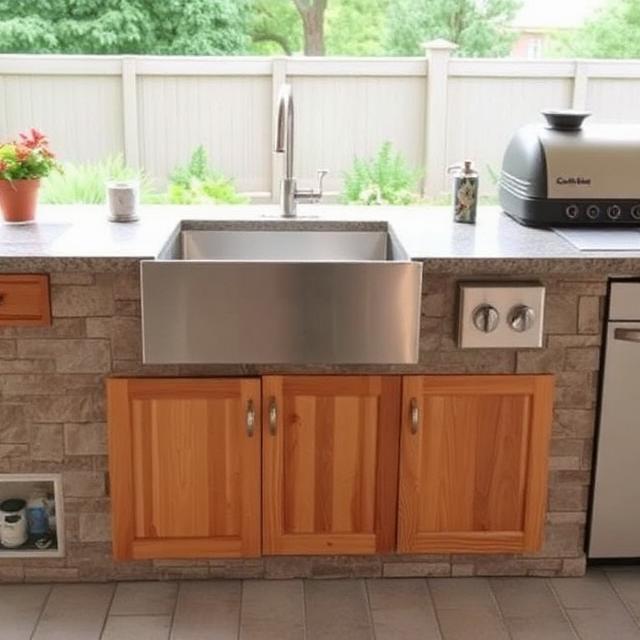
Why an Outdoor Kitchen Sink Changes Everything
Imagine grilling steaks on a Saturday afternoon without having to run inside every five minutes to wash your hands, rinse vegetables, or fill a pot with water. That single inconvenience is exactly why an outdoor kitchen sink has become one of the most-requested upgrades in backyard living spaces today.
An outdoor kitchen sink is more than just a convenience — it is a functional centerpiece that completes any outdoor cooking area. According to the American Institute of Architects (AIA), outdoor living spaces have been among the top requested residential design features for four consecutive years, with outdoor kitchens ranking in the top three. Installing a sink outdoors is no longer a luxury reserved for high-end estates. Homeowners across all budgets are discovering that a well-placed outdoor kitchen sink dramatically improves workflow, hygiene, and the overall outdoor cooking experience.
This article covers everything you need to know — from the types of outdoor kitchen sinks available, to materials, plumbing requirements, installation tips, costs, and the best products on the market right now. Whether you are starting from scratch or upgrading an existing setup, you will find all the information you need right here.
What Is an Outdoor Kitchen Sink?
An outdoor kitchen sink is a sink specifically designed or adapted for use in an open-air or semi-covered outdoor environments. Unlike standard indoor sinks, outdoor kitchen sinks are built to withstand the elements — rain, UV rays, extreme temperatures, and humidity — without rusting, cracking, or degrading quickly.
They are typically installed in an outdoor kitchen island, countertop, or cabinet module and are connected to a water supply line and drain. Some models are freestanding and portable, making them a great option for patios, decks, or spaces where permanent plumbing is not practical.
Key Entities Related to Outdoor Kitchen Sinks
Understanding the broader ecosystem around outdoor kitchen sinks helps you make better purchasing decisions. Here are the key entities and concepts:
| Entity | Description |
|---|---|
| Stainless Steel | Most common material for outdoor sinks due to durability and corrosion resistance |
| Drop-in Sink | Sits on top of a cutout in the countertop; easiest to install |
| Undermount Sink | Mounted below the countertop for a seamless look |
| Freestanding Sink | Portable unit that doesn’t require permanent installation |
| P-trap | Curved pipe section under the sink that prevents sewer gas from entering |
| Shutoff Valve | Allows water supply to be cut off for winterization |
| Outdoor-rated Faucet | Faucet designed specifically for outdoor use and temperature extremes |
| Frost-free Hose Bib | A type of valve used to prevent pipe freezing in cold climates |
| GFCI Outlet | Ground Fault Circuit Interrupter; required near outdoor water sources for electrical safety |
| Outdoor Kitchen Island | The main structure that houses an outdoor kitchen sink and other appliances |
Types of Outdoor Kitchen Sinks
Not all outdoor kitchen sinks are created equal. Choosing the right type depends on your budget, space, plumbing access, and aesthetic goals. Here is a breakdown of the main types:
1. Drop-In Outdoor Kitchen Sinks
Drop-in sinks (also called top-mount sinks) are the most popular and easiest to install. The sink drops into a pre-cut hole in the countertop, and the rim rests on the surface to hold it in place.
Best for: DIY installers, homeowners with limited plumbing experience, and outdoor kitchens with tile or concrete countertops.
Pros:
- Easy to install and replace
- Compatible with nearly all countertop materials
- Less expensive to install than undermount
Cons:
- The exposed rim can collect dirt and moisture
- Slightly less visually polished than undermount options
2. Undermount Outdoor Kitchen Sinks
Undermount sinks are mounted below the countertop surface, creating a clean, seamless look. They require a solid countertop material like granite, concrete, or stainless steel to support the weight.
Best for: Homeowners who want a high-end, professional look for their outdoor kitchen.
Pros:
- Easier to wipe debris directly into the sink
- Sleek, modern aesthetic
- No exposed rim to collect grime
Cons:
Suggested read: Kitchen Ductless Range Hoods: Everything You Need to Know Before You Buy
- More complex installation
- Higher installation cost
- Requires a compatible, reinforced countertop
3. Freestanding Outdoor Sinks
Freestanding sinks are standalone units that don’t require permanent mounting. Many models are portable and can connect to a standard garden hose for water supply.
Best for: Renters, those without permanent plumbing access, or as a secondary sink for large outdoor events.
Pros:
- No plumbing installation required
- Portable and flexible
- Great for temporary setups
Cons:
- Limited drain options (usually a bucket or ground drain)
- Not ideal for everyday heavy use
- Less durable than permanently installed sinks
4. Utility / Bar Outdoor Sinks
Utility sinks are deeper and wider than standard sinks — perfect for washing large pots, coolers, or soaking grilling racks. Bar sinks are smaller and compact, ideal for rinsing glasses, fruit, or herbs in a secondary location.
Best for: Homeowners with large outdoor kitchens who entertain frequently.
Best Materials for an Outdoor Kitchen Sink
Material selection is arguably the most important decision you will make when purchasing an outdoor kitchen sink. Outdoor environments are harsh, and the wrong material will rust, stain, or crack within a few seasons.
Stainless Steel (Most Recommended)
304 or 316 grade stainless steel is the gold standard for outdoor kitchen sinks. Marine-grade 316 stainless steel is especially recommended for coastal environments where salt air accelerates corrosion.
“Stainless steel remains the number one material for outdoor kitchen sinks because it combines longevity, hygiene, and aesthetic appeal in one package.” — Outdoor Kitchen Network, 2024
| Grade | Best For | Corrosion Resistance |
|---|---|---|
| 304 Stainless | Inland areas, general use | High |
| 316 Stainless | Coastal, high-humidity areas | Very High |
| 201 Stainless | Budget builds, low moisture areas | Moderate |
Key stainless steel specs to look for:
- Gauge: 16-gauge is ideal (lower number = thicker steel). Avoid anything above 20-gauge for outdoor use.
- Finish: Brushed finish hides scratches and water spots better than polished.
- Sound dampening pads: Look for pads underneath the basin to reduce noise.
Fireclay and Porcelain
Fireclay sinks are extremely durable and heat-resistant, making them a beautiful option for rustic or farmhouse-style outdoor kitchens. However, they are heavy and more prone to chipping if heavy objects are dropped on them.
Concrete Sinks
Cast concrete sinks are a premium custom option that can be molded to any shape or size. They are incredibly durable and can be sealed to resist moisture. The main drawback is weight and cost.
Composite / Granite Sinks
Granite composite sinks are made from a mixture of granite stone particles and acrylic resin. They are resistant to scratches, chips, heat, and fading — making them a solid outdoor option in mild climates.
Outdoor Kitchen Sink Plumbing: What You Need to Know
Plumbing is often where homeowners get intimidated, but with the right knowledge, it is completely manageable. Here is a straightforward overview.
Water Supply
You have two main options:
- Connecting to your home’s water supply line — This is the most reliable method and provides consistent hot and cold water. It requires running copper, PVC, or PEX tubing from your home to the outdoor kitchen location.
- Connecting to a garden hose bib — A more affordable option that works well for cold water only. Most outdoor kitchen sinks designed for hose connection come with a built-in quick-connect fitting.
Pro Tip: Always install a shutoff valve near the outdoor sink. This lets you drain and winterize the system before freezing temperatures hit, preventing burst pipes.
Suggested read: Cherry Kitchen Cabinets: Everything You Need to Know Before You Buy
Drainage Options
Getting water in is only half the battle. You also need a plan for getting water out.
Option 1: Connect to the Home’s Drain System This is the most sanitary and code-compliant method. It requires running a drain line with the proper slope (1/4 inch drop per foot) back to your home’s sewer or septic system.
Option 2: Dry Well or French Drain A dry well is a gravel-filled underground pit that allows water to slowly percolate into the ground. This works for graywater (non-toxic rinse water) and is a popular choice where running a full drain line isn’t practical.
Option 3: Bucket / Container Drain For freestanding or temporary sinks, some homeowners simply place a bucket under the drain. This works only for very light, occasional use.
Faucet Selection for Your Outdoor Kitchen Sink
Your faucet must be rated for outdoor use. Standard indoor faucets will corrode and fail quickly when exposed to weather. Look for:
- Solid stainless steel or solid brass construction
- UV-resistant finish that won’t fade or peel
- Single-hole or three-hole mounting (match to your sink’s pre-drilled holes)
- Freeze protection in cold climates — insulated or frost-free faucets help
Popular outdoor-rated faucet brands include Kraus, Moen, Delta, and Kohler.
How to Choose the Right Size Outdoor Kitchen Sink
Size matters — but bigger isn’t always better. Here is how to choose the right dimensions:
| Sink Size | Best Application | Typical Dimensions |
|---|---|---|
| Small Bar Sink | Secondary rinse sink, wet bar | 9″–15″ wide |
| Medium Single Bowl | Everyday outdoor cooking | 16″–24″ wide |
| Large Single Bowl | High-volume cooking, large parties | 25″–33″ wide |
| Double Bowl | Prep on one side, wash on the other | 33″–40″ wide |
General Rule: Your outdoor kitchen sink should be at least 25% of your total outdoor countertop space for comfortable use. For smaller setups, a 16–20″ single bowl is typically sufficient.
Outdoor Kitchen Sink Installation: Step-by-Step Overview
Note: Always check local building codes before beginning any plumbing work. Many jurisdictions require a licensed plumber for connections to a home’s main water supply.
Step 1: Plan Your Layout
Decide where the sink will go in your outdoor kitchen island. Place it close to the nearest water source to minimize pipe runs and cost.
Step 2: Prepare the Countertop Cutout
Measure and mark the cutout based on your sink’s template. Use an appropriate saw (circular saw for concrete, jigsaw for wood or composites).
Step 3: Run Water Supply Lines
Use PEX tubing for flexibility and freeze resistance. Run hot and cold lines (or cold-only for a simpler setup) from your shutoff valve to the sink location.
Step 4: Install the Drain and P-Trap
Connect the drain basket to the sink bowl, then connect the P-trap and drain line. Make sure you have the proper slope toward your drainage destination.
Step 5: Mount the Sink
For drop-in: Apply a bead of exterior-grade silicone caulk around the rim, set the sink in place, and secure with mounting clips from below.
For undermount: Use epoxy or silicone adhesive designed for your countertop material and secure with mounting brackets.
Suggested read: White Kitchen Sink: Everything You Need to Know Before Buying in 2026
Step 6: Connect the Faucet
Install the faucet through the pre-drilled holes in the sink. Connect supply lines to the shutoff valves. Turn on the water slowly and check for leaks at all connection points.
Step 7: Seal Everything
Apply exterior-grade waterproof silicone caulk around all edges where the sink meets the countertop. This is critical to prevent water infiltration that can damage your outdoor kitchen cabinet structure over time.
Cost Breakdown: Outdoor Kitchen Sink Budget Guide
Understanding costs upfront prevents nasty surprises. Here is a realistic breakdown:
| Cost Category | Budget Range | Notes |
|---|---|---|
| Outdoor sink unit | $80 – $800+ | Varies widely by material, size, and brand |
| Outdoor-rated faucet | $50 – $350 | Stainless or brass construction recommended |
| Plumbing materials (pipes, fittings) | $50 – $300 | More for longer runs |
| Professional plumber (if hired) | $200 – $600 | Depends on complexity and local rates |
| Drain installation | $100 – $500 | More if connecting to main sewer line |
| Total DIY Install | $280 – $1,450 | Excluding labor |
| Total Professional Install | $480 – $2,050 | Including labor |
Cost-Saving Tip: The single biggest money-saver is positioning your outdoor kitchen sink on an exterior wall closest to your home’s plumbing. Every additional foot of pipe run adds cost and complexity.
Top Outdoor Kitchen Sink Picks (2025 Recommendations)
Here are some of the best outdoor kitchen sinks available right now based on material quality, durability reviews, and value:
1. Kraus KHU100-30 Single Bowl Undermount Sink ⭐⭐⭐⭐⭐
- Material: 16-gauge T-304 stainless steel
- Size: 30″ x 18″
- Best For: Serious outdoor cooks who want a professional-grade setup
- Price Range: ~$180–$230
2. Sunstone Outdoor Rated Drop-In Sink ⭐⭐⭐⭐½
- Material: 304 stainless steel
- Size: 21″ x 17″
- Best For: Mid-range outdoor kitchen islands
- Price Range: ~$200–$280
3. Bull Outdoor Sink with Faucet Kit ⭐⭐⭐⭐
- Material: 304 stainless steel
- Size: 20″ x 15″
- Best For: Outdoor kitchen beginners wanting an all-in-one solution
- Price Range: ~$250–$350
4. Signature Hardware Dex Freestanding Outdoor Sink ⭐⭐⭐⭐
- Material: Stainless steel with powder-coated steel base
- Size: 24″ x 18″
- Best For: No-plumbing setups, garden areas, or event spaces
- Price Range: ~$400–$550
Case Study: Backyard Transformation in Austin, Texas
Homeowner: Jake & Maria T., Austin, TX Project: Full outdoor kitchen build with dedicated outdoor kitchen sink Budget: $12,000 total outdoor kitchen (sink portion: ~$600)
Jake and Maria had a large covered patio but no outdoor water source. After planning a full outdoor kitchen with a built-in grill, side burner, and outdoor refrigerator, they decided to add a 21″ drop-in stainless steel sink connected to their home’s cold-water supply line.
Key Decisions:
- Chose 304 stainless steel (inland Texas, low corrosion risk)
- Installed a frost-free shutoff valve despite mild winters — “better safe than sorry”
- Connected drain to a French drain rather than running 40 feet back to the home sewer
- Added a single-handle outdoor faucet with a spray head for rinsing vegetables and grilling tools
Results:
- Reduced trips inside the home by over 80% during cooking sessions
- Increased outdoor entertaining from once a month to nearly every weekend
- Added an estimated $8,000–$12,000 in home value (per their real estate agent)
“The outdoor kitchen sink was honestly the upgrade I didn’t know I needed. It seems small but it changes everything about how you cook outside.” — Jake T., Austin TX
Winterizing Your Outdoor Kitchen Sink
If you live in a climate where temperatures drop below 32°F (0°C), winterizing your outdoor sink is essential to prevent burst pipes and costly damage.
Winterization Checklist:
- [ ] Turn off the shutoff valve to the outdoor sink
- [ ] Open the faucet to release pressure
- [ ] Use an air compressor to blow out remaining water from the supply lines
- [ ] Disconnect and store the faucet hose (if applicable)
- [ ] Pour non-toxic RV antifreeze into the P-trap to prevent the water in the trap from freezing
- [ ] Cover the faucet with an outdoor faucet cover/insulator
- [ ] Store portable or freestanding sinks indoors
Outdoor Kitchen Sink Maintenance Tips
Keeping your outdoor sink in top condition doesn’t require much effort — just consistency.
Weekly:
- Rinse the sink bowl and drain with clean water
- Wipe down the faucet with a damp cloth
Monthly:
- Apply a stainless steel cleaner and polish to prevent water spots and maintain the finish
- Check all caulk lines for cracking or separation and reseal as needed
- Clear the drain screen of any food debris or leaves
Seasonally:
Suggested read: No 1 Chinese Kitchen: Everything You Need to Know Before You Order
- Inspect all supply line connections for leaks or corrosion
- Winterize before the first freeze (see above)
- Re-apply food-safe mineral oil or stainless conditioner at the start of each outdoor season
Call to Action: Ready to Upgrade with an Outdoor Kitchen Sink?
An outdoor kitchen sink is one of the smartest, highest-impact upgrades you can make to your backyard living space. Whether you are building a full outdoor kitchen from scratch or simply adding a sink to an existing setup, the right sink will save you time, improve hygiene, and make outdoor cooking dramatically more enjoyable.
👉 Shop the best outdoor kitchen sink options today and find the perfect model for your space, plumbing setup, and budget. Compare stainless steel models, check current pricing, and read verified buyer reviews before you buy.
🔗 Explore Top-Rated Outdoor Kitchen Sinks on Amazon — Updated weekly with the latest models and deals.
Frequently Asked Questions About Outdoor Kitchen Sinks
What is the best material for an outdoor kitchen sink?
Stainless steel (304 or 316 grade) is the best material for an outdoor kitchen sink. It resists corrosion, withstands temperature fluctuations, is easy to clean, and maintains its appearance for years. For coastal areas or high-humidity climates, 316 marine-grade stainless steel offers superior corrosion resistance.
Do I need a plumber to install an outdoor kitchen sink?
Not necessarily. If you are comfortable with basic plumbing and the connection is to a garden hose bib or an existing outdoor water line, many homeowners can handle the installation themselves. However, if you need to tap into your home’s main water supply line or connect to the sewer system, hiring a licensed plumber is strongly recommended — and may be legally required in your jurisdiction.
Can I use a regular indoor sink outside?
Technically yes, but it is not recommended. Indoor sinks are not built to handle UV exposure, moisture, freezing temperatures, or outdoor debris. They will typically rust, discolor, or degrade much faster than a purpose-built outdoor kitchen sink. Invest in a product specifically rated or designed for outdoor use.
How do I drain an outdoor kitchen sink without a sewer connection?
The most common alternatives are a dry well (soakaway pit) or a French drain — both allow graywater to slowly percolate into the ground. These are ideal for rinse water from food preparation and dishwashing. Always check local regulations, as some municipalities restrict graywater disposal methods.
How much does it cost to add a sink to an outdoor kitchen?
The total cost ranges from approximately $280 to $2,050 depending on the sink, faucet, plumbing materials, and whether you hire a professional plumber. DIY installations using a garden hose connection are at the lower end; full plumbing connections with a professional installer are at the higher end.
What size outdoor kitchen sink should I get?
For a primary outdoor cooking sink, a single bowl measuring 18″ to 24″ wide is sufficient for most homeowners. If you entertain large groups frequently or need to wash big pots and pans, opt for a 30″ single bowl or a double-bowl configuration. Always measure your countertop space and island width before purchasing.
Can outdoor kitchen sinks freeze?
Yes — water left in the supply lines and P-trap of an outdoor kitchen sink can freeze if temperatures drop below 32°F (0°C). This can crack pipes and damage fittings. Always winterize your outdoor sink before cold weather arrives by shutting off the water supply, blowing out the lines, and treating the P-trap with non-toxic antifreeze.
Are outdoor kitchen sinks waterproof?
The sink bowls themselves are waterproof by design, but the surrounding installation — caulk lines, cabinet structure, and plumbing connections — must also be properly sealed with exterior-grade waterproof silicone. Regular inspection and re-caulking every 1–2 seasons is important to maintain a weatherproof installation.
Conclusion
An outdoor kitchen sink is no longer a luxury — it is a practical, value-adding essential for anyone serious about outdoor cooking and entertaining. From choosing the right material (stainless steel, almost always) to understanding your plumbing options and proper winterization techniques, this guide has covered every angle you need to make a confident, informed purchase.
The key takeaways are simple: choose 16-gauge 304 stainless steel for most climates, plan your plumbing connection carefully, size the sink to match your cooking habits, and seal everything with exterior-grade materials. Done right, your outdoor kitchen sink will serve you reliably for 15 to 25 years with minimal maintenance.
Ready to take the next step? Browse the best outdoor kitchen sinks available now and transform your backyard into the ultimate outdoor cooking destination.
Sources & Citations
- American Institute of Architects. (2024). Home Design Trends Survey — Outdoor Living Spaces. Retrieved from https://www.aia.org/resources/home-design-trends
- Outdoor Kitchen Network. (2024). Best Materials for Outdoor Kitchen Sinks. Retrieved from https://www.outdoorkitchennetwork.com
- This Old House. How to Install an Outdoor Sink. Retrieved from https://www.thisoldhouse.com/plumbing/outdoor-sink
- National Kitchen & Bath Association (NKBA). (2023). Outdoor Kitchen Design Trends Report. Retrieved from https://www.nkba.org
- Bob Vila. Outdoor Sink Options: What to Know Before You Buy. Retrieved from https://www.bobvila.com/articles/outdoor-sink
- Amazon. Outdoor Kitchen Sink — Browse & Compare. https://www.amazon.com/s?k=outdoor+kitchen+sink

