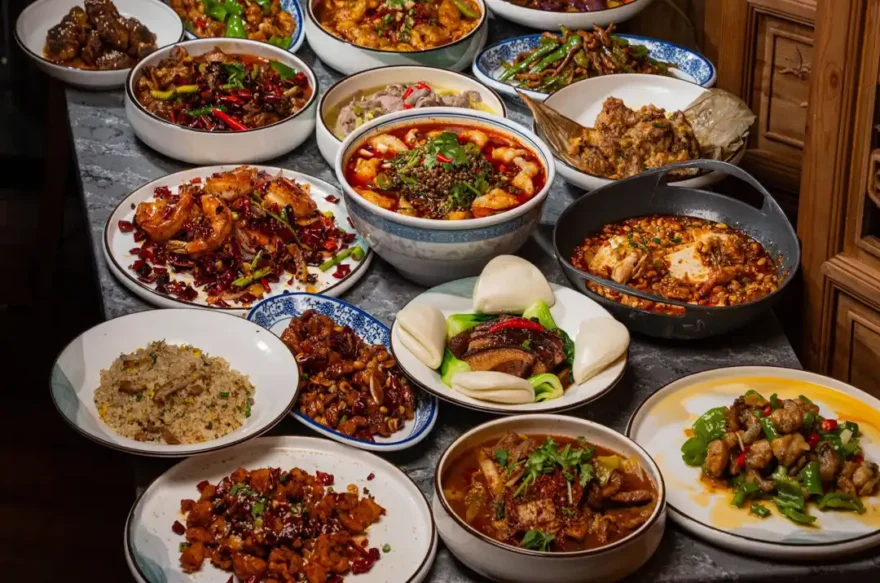
Whether you’ve wandered through the fog-kissed streets of San Francisco’s Chinatown or browsed the bustling night markets of New York’s Canal Street, one thing is certain — a Chinatown kitchen is unlike any other culinary world on earth. It is a living, breathing archive of centuries-old cooking traditions, immigrant ingenuity, and bold, layered flavors that have captivated food lovers across every continent.
This guide dives deep into what makes a Chinatown kitchen so extraordinary — from its foundational ingredients and iconic dishes, to its cultural history, health benefits, and where you can experience it yourself. Whether you’re a home cook, a food traveler, or simply someone who loves deeply satisfying food, understanding the Chinatown kitchen will forever change how you think about Chinese cuisine.
What Is a Chinatown Kitchen?
A Chinatown kitchen refers not just to a single restaurant or household cooking space — it represents an entire culinary ecosystem. It is the collective cooking identity of Chinese immigrant communities who, over generations, adapted their native regional food traditions to new countries while fiercely preserving their cultural roots.
The term “Chinatown kitchen” encompasses:
- Home kitchens where families have passed down recipes for three or four generations
- Restaurant kitchens in Chinatown districts ranging from hole-in-the-wall dim sum spots to Michelin-recognized establishments
- Street food stalls and food markets selling everything from roasted meats to hand-pulled noodles
- Cooking philosophies rooted in balance, economy, and the transformation of humble ingredients into extraordinary dishes
“Chinese cooking is not just food. It is memory, it is family, it is the story of survival told through flavor.” — Ken Hom, celebrated Chinese-American chef and cookbook author
The Chinatown kitchen is a democratic space. It has always been about feeding people well — not just feeding the wealthy. This ethos is why Chinatown kitchen cooking remains one of the most accessible, yet deeply complex, culinary traditions in the world.
A Brief History of the Chinatown Kitchen
To truly appreciate the Chinatown kitchen, you need to understand its origins. Chinese immigration to Western countries accelerated dramatically in the mid-19th century, particularly during the California Gold Rush of 1849 and the construction of the transcontinental railroad in the United States.
Key historical milestones:
| Year | Event | Impact on Chinatown Kitchen |
|---|---|---|
| 1848–1855 | California Gold Rush | Large-scale Chinese immigration to the U.S. West Coast begins |
| 1869 | Transcontinental Railroad completed | Chinese laborers settle in cities, establishing early Chinatowns |
| 1882 | Chinese Exclusion Act (U.S.) | Immigration halted; existing communities doubled down on self-sufficiency, including food culture |
| 1900s | Chinatowns expand in NYC, SF, London | Restaurant culture flourishes as a economic survival strategy |
| 1965 | U.S. Immigration Act reformed | New wave of immigration brings diverse regional Chinese cuisines |
| 1980s–present | Globalization of Chinese food | Chinatown kitchen cooking achieves worldwide recognition |
Chinese immigrant cooks were extraordinarily resourceful. Faced with unfamiliar ingredients, limited budgets, and sometimes hostile environments, they improvised — creating dishes like chop suey, which many food historians believe was invented in American Chinatowns rather than China itself. This spirit of adaptation is one of the Chinatown kitchen’s defining characteristics.
The Essential Ingredients of a Chinatown Kitchen
Walk into any serious Chinatown kitchen — whether in a home or a restaurant — and you’ll find a core pantry of ingredients that form the foundation of almost everything cooked there. These ingredients are the building blocks of flavor.
The Chinatown Kitchen Pantry: Must-Have Staples
Sauces and Condiments:
- Soy sauce (light and dark varieties) — the umami backbone of nearly every dish
- Oyster sauce — rich, slightly sweet, and deeply savory; used in stir-fries and braises
- Hoisin sauce — thick, fragrant, and used as a glaze or dipping sauce
- Doubanjiang (fermented bean paste) — a fiery, complex paste central to Sichuan cooking
- Shaoxing rice wine — adds depth to marinades and braises
- Sesame oil — used as a finishing oil for its nutty fragrance, never for cooking at high heat
- Black vinegar (Zhenjiang) — tart and smoky; essential for dumplings and cold noodles
Aromatics:
- Fresh ginger and garlic — used in almost every savory preparation
- Green onions (scallions) — used both as a cooked ingredient and a raw garnish
- Dried chilies — for heat and depth, especially in Sichuan and Hunan cooking
- Star anise, five-spice powder — for braises and roasted meats
Proteins:
- Tofu (firm, silken, and fermented varieties)
- Pork (the dominant meat across most Chinese regional cuisines)
- Duck and chicken
- Fresh and dried seafood
- Preserved and cured meats (lap cheong sausage, Chinese bacon)
Noodles and Rice:
- Jasmine rice
- Rice noodles (flat and vermicelli)
- Egg noodles
- Wheat noodles (lo mein, wonton noodles)
- Glass noodles (mung bean starch)
A critical fact: According to food anthropologist E.N. Anderson, rice has been cultivated in China for more than 7,000 years, making it the oldest and most central element of the Chinatown kitchen pantry.
The Most Iconic Chinatown Kitchen Dishes
Every Chinatown has its signature dishes — foods that have become almost synonymous with the neighborhood itself. Below are the most essential and beloved Chinatown kitchen dishes you need to know.
Suggested read: Oriental Kitchen: Everything You Need to Know About Asian Cooking, Flavors & Dishes
1. Dim Sum (點心)
Dim sum is not a single dish — it is an entire dining experience. Translated literally as “touch the heart,” dim sum is a collection of small, bite-sized dishes served alongside tea in a tradition called yum cha (drinking tea). It is arguably the most social food experience the Chinatown kitchen has produced.
Classic dim sum items include:
- Har gow — steamed shrimp dumplings with delicate, translucent wrappers
- Siu mai — open-topped pork and shrimp dumplings
- Char siu bao — fluffy steamed buns filled with BBQ pork
- Cheung fun — silky rice noodle rolls filled with shrimp, beef, or pork
- Lo bak gou — pan-fried turnip cake with crispy edges
- Egg tarts — buttery pastry shells filled with silky egg custard
A case study in dim sum culture: Lung King Heen in Hong Kong’s Four Seasons Hotel became the first Chinese restaurant in the world to receive three Michelin stars in 2009. Their dim sum, including extraordinarily refined versions of classic Chinatown kitchen staples, helped redefine global perceptions of Chinese food as high cuisine.
2. Roast Meats (燒味)
The Chinatown roast meat shop — or siu mei — is one of the most iconic storefronts in any Chinatown district. Lacquered ducks, glistening slabs of pork belly, and crimson-glazed BBQ pork (char siu) hang in the window, drawing customers in with their mahogany sheen and irresistible aromas.
The three pillars of Chinatown roast meats:
| Dish | Chinese Name | Key Flavor Profile |
|---|---|---|
| BBQ Pork | Char Siu (叉燒) | Sweet, savory, caramelized with five-spice |
| Roast Duck | Siu Ngap (燒鴨) | Crispy skin, aromatic, slightly gamey |
| Crispy Pork Belly | Siu Yuk (燒肉) | Shatteringly crispy skin, rich fatty meat |
3. Hand-Pulled Noodles (拉麵)
La mian — hand-pulled noodles — represent one of the most awe-inspiring techniques in the Chinatown kitchen arsenal. A skilled noodle puller can stretch and fold a single lump of dough into hundreds of individual strands in under two minutes. It is equal parts cooking and performance art.
These noodles appear across multiple regional cuisines:
- Lanzhou beef noodle soup — clear, gently spiced beef broth with hand-pulled noodles, radish, and chili oil
- Dan dan noodles — Sichuan-style noodles with sesame paste, ground pork, and numbing Sichuan peppercorn
- Zhajiangmian — Beijing-style noodles topped with fermented soybean paste and ground pork
4. Soup Dumplings (小籠包)
Xiao long bao — soup dumplings — may be the single most technically demanding creation of the Chinatown kitchen. These delicate parcels contain a mixture of seasoned pork and a cube of solidified meat stock gelatin. When steamed, the gelatin melts into a scalding, intensely flavorful soup inside the dumpling skin.
A properly made xiao long bao should have:
- A minimum of 18 pleats around the top (the mark of a skilled dumpling maker)
- Thin, almost translucent skin that holds its shape without tearing
- A burst of hot, rich broth when bitten into
Din Tai Fung, founded in Taipei and now with outposts in Chinatown districts worldwide, became the global ambassador for soup dumplings, earning Michelin recognition across multiple countries.
5. Congee (粥)
Congee — or jook in Cantonese — is a humble rice porridge that occupies a special place in every Chinatown kitchen. Slow-cooked until the rice breaks down into a silky, creamy base, congee is the ultimate comfort food. It is served at breakfast, as a late-night meal, and as food for the sick, the elderly, and the newborn.
Popular congee toppings:
- Silky poached fish fillet
- Century egg and salted pork
- Ginger and scallion
- Pork and preserved vegetables
- Fried dough sticks (youtiao) for dipping
The Regional Diversity Within the Chinatown Kitchen
One of the most common misconceptions about Chinese food in the West is that it is monolithic. In reality, China has eight major culinary traditions — each with dramatically different flavor profiles, cooking techniques, and signature dishes. Modern Chinatowns reflect this diversity.
The Eight Major Chinese Culinary Traditions
| Cuisine | Region | Defining Characteristics | Key Dishes |
|---|---|---|---|
| Cantonese | Guangdong Province | Delicate, fresh, lightly seasoned | Dim sum, steamed fish, roast meats |
| Sichuan | Sichuan Province | Fiery, numbing (má là), bold | Mapo tofu, dan dan noodles, hot pot |
| Shandong | Shandong Province | Salty, braised, wheat-based | Braised abalone, hand-pulled noodles |
| Hunan | Hunan Province | Spicy (pure heat, not numbing), sour | Stinky tofu, red-braised pork |
| Fujian | Fujian Province | Umami-rich, soupy, seafood-forward | Red yeast rice dishes, light soups |
| Anhui | Anhui Province | Earthy, wild herbs, preserved ingredients | Braised pigeon, bamboo shoots |
| Jiangsu | Jiangsu Province | Sweet, refined, meticulous presentation | Nanjing salted duck, soup dumplings |
| Zhejiang | Zhejiang Province | Fresh, light, slightly sweet | West Lake fish in vinegar sauce |
The dominant cuisine in most Western Chinatowns has historically been Cantonese, because most early Chinese immigrants to the United States and United Kingdom came from Guangdong Province. However, since the 1980s, Sichuan, Shanghainese, and Fujianese restaurants have expanded dramatically in Chinatown districts across the world.
Key Cooking Techniques of the Chinatown Kitchen
Understanding the how of Chinatown kitchen cooking is just as important as understanding the what. Several techniques are central to the flavors and textures that make this cuisine distinctive.
Wok Hei (鑊氣) — The Breath of the Wok
Wok hei is perhaps the most sought-after and hardest-to-replicate element of Chinatown kitchen cooking. Translated as “breath of the wok” or “wok energy,” wok hei is the slightly charred, smoky, deeply savory quality that only comes from cooking at extremely high temperatures in a well-seasoned carbon steel wok.
Suggested read: China Kitchen Menu: Everything You Need to Know About Authentic Chinese Dishes, Prices & Ordering Tips
To achieve true wok hei, you need:
- A carbon steel wok (not non-stick)
- Extremely high heat — professional restaurant burners reach 200,000 BTU, while standard home stoves reach only 15,000–18,000 BTU
- Quick, confident tossing to ensure even cooking and aeration
- Small batch sizes so ingredients don’t steam rather than sear
The science behind wok hei: Research published in food science literature confirms that wok hei flavor compounds come primarily from the Maillard reaction — the same browning reaction responsible for the crust on a sear steak — combined with compounds produced from caramelized soy sauce and rapid oxidation at extreme temperatures.
Other Essential Chinatown Kitchen Techniques
- Red braising (红烧, hóng shāo) — slow-cooking proteins in soy sauce, sugar, and Shaoxing wine until deeply caramelized and fall-apart tender
- Steaming (蒸, zhēng) — the Cantonese gold standard for cooking delicate proteins like fish and dumplings with maximum flavor retention
- Blanching and shocking — quickly boiling vegetables then plunging into ice water to preserve vibrant color and crisp texture
- Velveting (滑炒) — marinating proteins in a mixture of cornstarch, egg white, and baking soda before cooking to achieve a silky, restaurant-quality texture
- Smoking — particularly in Hunan and Sichuan cooking, using tea leaves, camphor wood, or rice to impart smoky flavor
Health and Nutrition in the Chinatown Kitchen
Traditional Chinatown kitchen cooking is not just delicious — it is also one of the most nutritionally balanced culinary traditions in the world. Traditional Chinese dietary philosophy is rooted in the concept of food as medicine, deeply connected to Traditional Chinese Medicine (TCM) principles.
Nutritional Highlights of the Chinatown Kitchen Diet
High vegetable diversity: A typical Chinatown kitchen meal incorporates 4–6 different vegetables, prepared in ways that maximize nutrient retention (quick stir-frying and steaming).
Legume-forward protein: Tofu, tempeh, and edamame provide plant-based protein rich in isoflavones, which have been linked to reduced cardiovascular disease risk.
Fermented foods: Dishes like preserved vegetables (pao cai), fermented tofu (doufuru), and miso-adjacent bean pastes are rich in probiotics that support gut health.
Strategic use of fat: Rather than saturating dishes in butter or cream, the Chinatown kitchen uses oil sparingly — primarily as a cooking medium for wok-cooking — and relies on umami-rich sauces for flavor.
Research data on Chinese dietary health:
A landmark study published in the British Medical Journal (2019) analyzing the diets of over 500,000 participants in China found that those who consumed a traditional Chinese diet (high in vegetables, whole grains, and fermented foods) had significantly lower rates of cardiovascular disease than those who had adopted a Western diet.
Chinatown Kitchen Around the World: A Neighborhood Comparison
Chinatowns exist on every inhabited continent. Each one has developed its own distinct culinary identity, shaped by local ingredients, immigration patterns, and cultural blending.
Famous Chinatown Kitchen Destinations
San Francisco Chinatown (USA)
- Founded: 1848 — the oldest Chinatown in North America
- Specialty: Cantonese dim sum, roast meats, clay pot rice
- Must-visit: Great Eastern Restaurant (where former U.S. President Barack Obama famously dined), Delicious Dim Sum
New York City Chinatown (USA)
- Founded: 1870s — primarily in lower Manhattan’s Canal Street area
- Specialty: Fujianese cuisine, hand-pulled noodle shops, bubble tea, Cantonese seafood
- Must-visit: Joe’s Shanghai (famous for soup dumplings), Xi’an Famous Foods
London Chinatown (UK)
- Founded: 1970s in Soho’s Gerrard Street
- Specialty: Cantonese roast meats, hot pot, Taiwanese street food
- Must-visit: Barshu (Sichuan cuisine), Four Seasons (legendary roast duck)
Melbourne Chinatown (Australia)
- Founded: 1854 — the longest continuously operating Chinatown in the Southern Hemisphere
- Specialty: Cantonese yum cha, Malaysian-Chinese fusion, modern Chinese fine dining
- Must-visit: Flower Drum (legendary Cantonese fine dining since 1975)
Yokohama Chinatown (Japan)
- Founded: 1859 — the largest Chinatown in Japan
- Specialty: Shanghainese and Cantonese cuisine adapted with Japanese sensibilities
- Must-visit: Heichinrou restaurant, street food stalls for xiao long bao and char siu bao
How to Cook Chinatown Kitchen Food at Home
You don’t need to live near a Chinatown to bring its flavors into your own kitchen. With the right tools, pantry staples, and techniques, you can recreate many iconic Chinatown kitchen dishes at home.
Essential Equipment for a Chinatown-Style Home Kitchen
1. A 14-inch carbon steel wok — the single most important tool. Season it properly and it will last a lifetime.
Suggested read: No 1 Chinese Kitchen: Everything You Need to Know Before You Order
2. A bamboo steamer set — for dumplings, fish, buns, and vegetables. Stack multiple tiers for efficiency.
3. A large cleaver (Chinese chef’s knife) — used for everything from breaking down proteins to smashing garlic and mincing aromatics.
4. A rice cooker — virtually every Chinese household owns one. Produces perfectly cooked rice every time.
5. A clay pot (砂鍋, shāguō) — for slow braises, congee, and clay pot rice dishes.
6. A mortar and pestle — for grinding spices and making pastes.
A Simple Chinatown Kitchen Recipe: Cantonese Steamed Fish with Ginger and Scallion
This dish is the quintessential expression of Cantonese cooking philosophy — letting the quality of the ingredient speak for itself, enhanced by a minimal but perfectly balanced sauce.
Ingredients (serves 2–3):
- 1 whole sea bass or red snapper (600–800g), cleaned and scored
- 4cm knob of fresh ginger, cut into fine julienne strips
- 4 stalks green onion, cut into 5cm pieces, then julienned
- 3 tbsp light soy sauce
- 1 tbsp Shaoxing rice wine
- 1 tsp sugar
- 3 tbsp neutral oil (vegetable or peanut)
- 1 tbsp sesame oil
Method:
- Season the fish cavity with Shaoxing wine and a few ginger slices. Place on a heatproof plate.
- Steam over high heat for 8–10 minutes, depending on thickness, until the flesh just flakes.
- Carefully pour off any accumulated liquid from the plate (this removes the fishy smell).
- Layer the julienned ginger and green onion over the fish.
- Mix soy sauce, remaining Shaoxing wine, and sugar; pour over the fish.
- Heat the neutral oil and sesame oil in a small pan until smoking hot.
- Pour the screaming-hot oil directly over the ginger and scallion — the sizzle perfumes the fish and slightly cooks the aromatics.
- Serve immediately with steamed jasmine rice.
The Cultural Significance of the Chinatown Kitchen
The Chinatown kitchen is never just about food. It is a repository of cultural memory — a way that immigrant communities have maintained their identity, preserved their language, and built economic communities in foreign lands.
Food as resistance: During periods of intense discrimination against Chinese immigrants (such as the Chinese Exclusion Act era in the U.S.), the restaurant and the home kitchen became places of cultural preservation. Cooking the food of your homeland was an act of defiance and pride.
Food as economic survival: Many early Chinese immigrants found that operating restaurants was one of the few businesses where they could find customers across racial lines. The Chinatown kitchen became an economic lifeline.
Food as community building: Institutions like dim sum restaurants function as community centers. Multi-generational families gather on Sunday mornings not just to eat, but to socialize, conduct business, and maintain social bonds.
Food as language: For many second and third-generation Chinese-Americans who may not speak Cantonese or Mandarin fluently, the flavors of the Chinatown kitchen represent their most direct connection to their heritage.
Chinatown Kitchen in Popular Culture and Media
The Chinatown kitchen has inspired chefs, writers, filmmakers, and artists around the world. Its influence on global food culture is immeasurable.
Notable media featuring the Chinatown kitchen:
- “Lucky Peach” magazine (2011–2017) — David Chang’s beloved food publication frequently explored Chinatown kitchen traditions with academic rigor and irreverent humor
- “The Chinese Kitchen” by Eileen Yin-Fei Lo — considered one of the definitive English-language texts on traditional Chinese home cooking
- Anthony Bourdain’s “Parts Unknown” — multiple episodes explored Chinatown districts worldwide, treating the food with deep cultural respect
- “Ugly Delicious” (Netflix) — David Chang’s series devoted an entire episode to examining the evolution and cultural complexity of Chinese-American food from the Chinatown kitchen tradition
- “Wok to Walk” — the international chain built its entire brand identity around the theatrical, high-heat wok cooking of the Chinatown kitchen
The Future of the Chinatown Kitchen
The Chinatown kitchen is not frozen in amber — it is constantly evolving. A new generation of chefs is reinterpreting traditional Chinatown kitchen cooking through a modern lens, applying fine dining technique and new ingredients while honoring their roots.
Suggested read: Kitchen Ductless Range Hoods: Everything You Need to Know Before You Buy
Key trends shaping the future of the Chinatown kitchen:
1. Modern Chinese fine dining — chefs like Mingoo Kang (Korea), Andrew Wong (London), and Eric Sze (New York) are elevating Chinatown kitchen traditions to the highest levels of culinary art, earning Michelin stars and critical acclaim.
2. Regional Chinese cuisines finally getting their due — beyond Cantonese, Western audiences are now discovering the complex pleasures of Yunnan cuisine, Xinjiang cooking, and the incredible diversity of Northern Chinese wheat-based dishes.
3. Plant-based adaptations — Buddhist-inspired vegetarian cooking has always been part of the Chinatown kitchen tradition. Today, a wave of modern plant-based Chinese restaurants is making these dishes more accessible and visible than ever.
4. Preservation of dying techniques — organizations and individuals are working to document and preserve endangered Chinatown kitchen techniques, such as hand-forming char siu bao and the art of traditional mooncake making.
5. Digital knowledge sharing — YouTube channels, cooking blogs, and social media accounts devoted to Chinatown kitchen cooking have exploded in popularity, bringing techniques that once lived only inside grandmother’s kitchens into living rooms worldwide.
Internal Resources
Frequently Asked Questions About Chinatown Kitchen
What is a Chinatown kitchen known for? A Chinatown kitchen is known for its bold, diverse, and deeply cultural approach to Chinese cooking. It encompasses everything from delicate dim sum and hand-pulled noodles to fiery Sichuan hot pot and lacquered roast duck. The Chinatown kitchen is celebrated for its use of high-heat wok cooking, complex sauces, fresh aromatics, and an extraordinary diversity of regional Chinese culinary traditions.
Is Chinatown kitchen food healthy? Yes — traditional Chinatown kitchen cooking is generally considered one of the healthier culinary traditions globally. It emphasizes vegetables, plant-based proteins like tofu, light steaming and quick stir-frying, and minimal use of dairy or refined sugars. That said, some restaurant preparations (particularly deep-fried items and heavily sauced dishes) can be high in sodium and fat when consumed regularly.
What is the difference between Chinatown kitchen food and Chinese takeout? Western Chinese takeout — dishes like General Tso’s chicken, fortune cookies, and American-style egg rolls — represents a hybridized cuisine developed specifically for Western palates. Authentic Chinatown kitchen cooking is far more diverse, nuanced, and regionally specific. True Chinatown kitchen food reflects the full complexity of Chinese culinary traditions, from delicate Cantonese steaming to bold Sichuan spicing.
What equipment do I need to cook Chinatown kitchen food at home? The most important piece of equipment for cooking Chinatown kitchen food at home is a carbon steel wok. Beyond that, a bamboo steamer, a rice cooker, a Chinese cleaver, and a clay pot will cover the vast majority of traditional recipes. A well-stocked pantry — including soy sauce, oyster sauce, Shaoxing wine, sesame oil, and fermented bean paste — is equally essential.
Which Chinatown kitchen dish should a beginner try first? For beginners, fried rice is the ideal entry point into Chinatown kitchen cooking. It teaches the fundamentals of wok cooking, heat management, and balancing flavors. Once you’re comfortable with fried rice, Cantonese steamed fish and simple stir-fried vegetables with garlic are excellent next steps.
Where can I find the best Chinatown kitchen restaurants in the world? The most celebrated Chinatown kitchen restaurant districts include San Francisco’s Grant Avenue corridor, New York’s Canal Street and Flushing neighborhoods, London’s Gerrard Street in Soho, Melbourne’s Little Bourke Street, and Sydney’s Dixon Street. For the most authentic experience, look for restaurants where the menu is primarily in Chinese — these are typically the spots where local Chinese families eat.
What are the must-try dishes at a Chinatown kitchen? The absolute must-try dishes at any Chinatown kitchen include: dim sum (especially har gow and char siu bao), soup dumplings (xiao long bao), Cantonese roast duck or BBQ pork (char siu), hand-pulled noodle soups, mapo tofu, congee, and Peking duck if available. These dishes represent the breadth and depth of what the Chinatown kitchen has to offer.
Ready to Experience the Chinatown Kitchen for Yourself?
Whether you want to visit your nearest Chinatown district, stock your pantry with Chinatown kitchen essentials, or start cooking these iconic dishes at home — the world of the Chinatown kitchen is waiting for you. Visit your nearest Chinatown kitchen restaurant today and discover why millions of food lovers around the world consider it the most exciting culinary destination on earth.
Citation: Information about Chinatown kitchen culinary history and regional Chinese cuisine traditions referenced from the Serious Eats Chinatown food guide, the Oxford Companion to Food (3rd ed.), and E.N. Anderson’s “The Food of China” (Yale University Press, 1988).
Keywords: chinatown kitchen, chinatown kitchen food, chinatown kitchen recipes, chinatown kitchen dishes, chinatown kitchen cooking, chinatown kitchen restaurant, best chinatown kitchen

