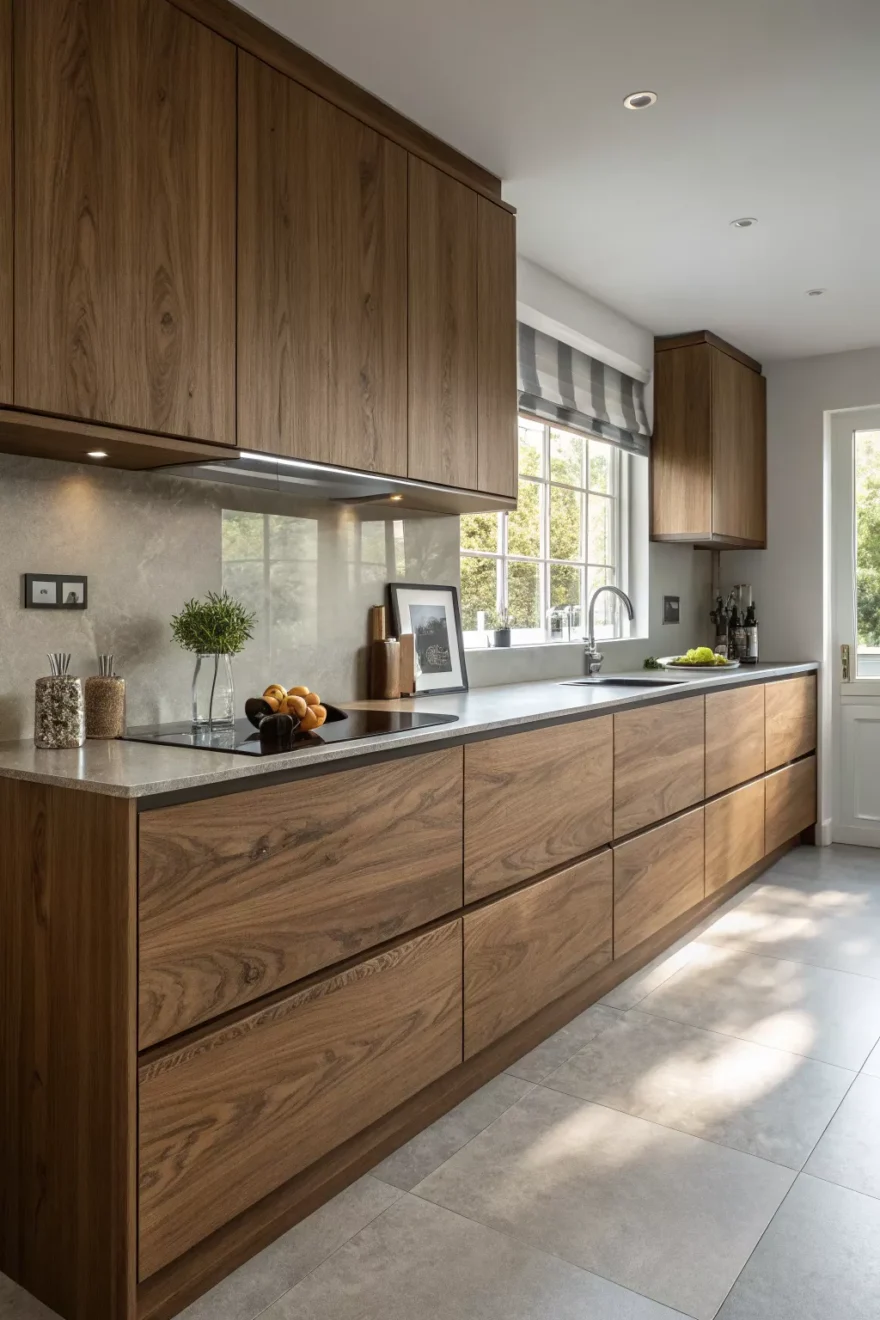
Walnut kitchen cabinets have become one of the most sought-after choices in modern home design. Rich, warm, and undeniably elegant, walnut wood brings a natural sophistication to any kitchen — whether you prefer a sleek contemporary space or a cozy, rustic retreat. But choosing walnut for your cabinetry is a big investment, and it pays to know exactly what you’re getting into before you commit.
This article covers everything you need to know about walnut kitchen cabinets: the different styles available, how much they cost, their advantages and drawbacks, how to care for them, and how to design a stunning kitchen around them. By the end, you’ll have all the information you need to make a confident, informed decision.
What Are Walnut Kitchen Cabinets?
Walnut kitchen cabinets are cabinetry crafted from walnut wood — a hardwood species prized for its deep, chocolate-brown tones, dramatic grain patterns, and natural luster. Walnut has been a luxury material in fine furniture for centuries, and it’s now increasingly popular in kitchen design as homeowners seek warmth, character, and durability in their spaces.
Walnut is a native North American hardwood, most commonly harvested from the Black Walnut (Juglans nigra) tree. It is known for being moderately hard (with a Janka hardness rating of approximately 1,010 lbf), which makes it tough enough for high-traffic kitchen use while remaining workable for cabinetmakers.
What makes walnut truly stand out is its visual depth. The heartwood ranges from pale grayish-brown to rich chocolate, often featuring dark streaks and swirling grain patterns that give each cabinet a one-of-a-kind appearance. No two walnut cabinets look exactly alike — a quality that high-end homeowners and interior designers specifically seek out.
“Walnut is the caviar of cabinetry wood. It brings a sense of luxury and warmth that no paint or stain on cheaper wood can replicate.”
— Interior Designer, Architectural Digest
According to the National Kitchen and Bath Association (NKBA), wood-toned kitchen cabinets — including walnut — saw a significant surge in popularity in recent years, with natural wood finishes returning as a top trend after decades of painted cabinetry dominance.
Types of Walnut Used in Kitchen Cabinets
Not all walnut cabinets are created equal. The type of walnut used greatly affects the look, durability, and price of your cabinetry.
1. Solid Black Walnut (American Walnut)
This is the premium choice — cabinets made entirely from solid Black Walnut lumber. The heartwood is rich and dark, while the sapwood (the outer layer of the tree) is a creamy, pale tan. Many cabinet makers use both heartwood and sapwood in the same door to create a dramatic two-tone contrast.
- Pros: Maximum durability, authentic grain, increases home value
- Cons: Expensive, can expand and contract with humidity changes
2. Walnut Veneer
Walnut veneer cabinets feature a thin slice of real walnut wood bonded to a substrate (usually MDF or plywood). Modern veneers can be as thin as 0.5mm to 6mm and are virtually indistinguishable from solid wood to the untrained eye.
- Pros: More affordable, dimensionally stable, less prone to warping
- Cons: Cannot be refinished as many times as solid wood
3. Engineered Walnut (Walnut Plywood)
Walnut plywood uses multiple layers of wood with a walnut veneer on the face. This is a popular choice for cabinet boxes (the interior structure) even in high-end builds because of its superior stability.
- Pros: Excellent stability, resistant to seasonal movement, cost-effective
- Cons: Less premium appearance on edges (requires edge banding)
4. Claro Walnut
Less common but strikingly beautiful, Claro Walnut (Juglans hindsii) is a California native species with even more dramatic figuring — including burls, swirls, and color variation from olive green to chocolate brown.
- Pros: Extraordinary visual character, highly unique
- Cons: Very expensive and harder to source
Popular Walnut Kitchen Cabinet Styles
Walnut kitchen cabinets pair beautifully with a wide range of design aesthetics. Here are the most popular styles homeowners choose.
Flat-Panel (Slab) Walnut Cabinets
Flat-panel or slab-front cabinets are the most popular choice for modern and contemporary kitchens. The door consists of a single, flat piece of walnut with no frame or raised center panel. This minimalist design lets the natural grain of the walnut take center stage.
Suggested read: Kitchen & Table: How to Design, Style, and Elevate Your Dining Space in 2025
- Best for: Mid-century modern, Scandinavian, contemporary kitchens
- Commonly paired with: Stainless steel appliances, concrete or stone countertops, handleless hardware
Shaker-Style Walnut Cabinets
Shaker cabinets feature a five-piece door with a recessed center panel and a simple, clean frame. It’s the most versatile cabinet style in American kitchens and works exceptionally well in walnut because the frame-and-panel construction showcases the wood’s grain on every surface.
- Best for: Transitional, farmhouse, and traditional kitchens
- Commonly paired with: Quartz or marble countertops, subway tile backsplash, brushed brass or matte black hardware
Raised-Panel Walnut Cabinets
Raised-panel doors feature a center panel that is elevated above the surrounding frame, creating a more formal, traditional look. In walnut, this style creates a rich, classic aesthetic reminiscent of old-world craftsmanship.
- Best for: Traditional, colonial, and formal kitchen designs
- Commonly paired with: Ornate hardware, crown molding, warm-toned countertops
Open-Frame (Glass-Insert) Walnut Cabinets
Some homeowners choose to incorporate glass inserts into their walnut cabinet doors — either clear, frosted, or reeded glass. This adds visual lightness and allows you to display beautiful dishware, while the walnut frame provides warmth and richness.
- Best for: Traditional and transitional kitchens wanting a curated, open feel
Floating or Handleless Walnut Cabinets
A growing trend in high-end kitchen design, handleless walnut cabinets use integrated finger-pull channels or push-to-open hardware. The result is a seamlessly sleek surface where the beautiful walnut grain becomes the primary design element.
- Best for: Ultra-modern and European-style kitchens
Walnut Kitchen Cabinet Finishes and Colors
One of the most important decisions you’ll make is how to finish your walnut cabinets. The right finish protects the wood and dramatically affects how the color appears.
Natural/Clear Finish
A clear, oil-based or water-based finish lets the walnut’s natural color shine — typically a medium brown with warm undertones. This finish is popular with homeowners who love the authentic, unaltered look of the wood.
Oiled Finish (Hardwax Oil)
Penetrating oil finishes such as Rubio Monocoat or Osmo Polyx soak into the wood fibers rather than forming a surface film. They enhance the natural depth of the grain and give the wood a matte, tactile feel. Oiled walnut has a soft, natural appearance that many find irresistible.
Matte Lacquer
A matte lacquer provides better protection than oil while maintaining a low-sheen, sophisticated appearance. It’s a popular choice in contemporary kitchens where the cabinets need to withstand daily cooking activity.
Satin or Semi-Gloss Lacquer
A slightly higher sheen that reflects a bit of light and makes the kitchen feel brighter. Satin is the most popular sheen level overall because it strikes a balance between beauty and practicality.
Dark Stain (Ebonized Walnut)
Some designers choose to apply a dark stain or ebonizing treatment to walnut to deepen the chocolate tones to near-black. This creates a dramatic, moody kitchen with enormous visual impact — especially when paired with light countertops.
Bleached or Light Walnut
On the opposite end, walnut can be bleached or whitewashed to lighten its naturally dark tones. This produces a sophisticated blonde or greige appearance that works well in light-filled, Scandinavian-inspired kitchens.
How Much Do Walnut Kitchen Cabinets Cost?
Walnut kitchen cabinets are a premium product, and their pricing reflects that. Below is a general cost breakdown:
| Cabinet Type | Cost Per Linear Foot | Average Full Kitchen Cost |
|---|---|---|
| Stock walnut veneer cabinets | $150 – $300 | $4,500 – $9,000 |
| Semi-custom walnut cabinets | $300 – $600 | $9,000 – $18,000 |
| Custom solid walnut cabinets | $600 – $1,500+ | $18,000 – $50,000+ |
| Claro/premium walnut (custom) | $1,200 – $2,500+ | $35,000 – $80,000+ |
Costs above are estimates for cabinet materials only and do not include installation, hardware, or countertops.
Factors That Affect the Cost of Walnut Cabinets
- Solid wood vs. veneer: Solid walnut can be 2–3x more expensive than veneer options.
- Cabinet construction: Dovetail joinery, soft-close hinges, and full-extension drawers add cost.
- Kitchen size: The more linear footage of cabinetry, the higher the total cost.
- Finish type: Hand-applied oil finishes or custom stains are more expensive than factory sprayed lacquer.
- Hardware: High-end pulls and hinges from brands like Rejuvenation, Emtek, or Häfele can add $1,000–$5,000+ to a kitchen.
- Geographic location: Labor costs for installation vary significantly by region.
Pro Tip: If solid walnut is out of budget, walnut veneer on a quality plywood substrate is an excellent alternative. Modern veneers look virtually identical to solid wood and offer better dimensional stability.
Suggested read: Rustic Kitchen Cabinets: How to Get That Warm, Cozy Look Without Breaking the Bank
Pros and Cons of Walnut Kitchen Cabinets
Before investing in walnut cabinetry, it’s important to understand both sides of the equation.
✅ Pros of Walnut Kitchen Cabinets
- Exceptional beauty: Walnut’s rich, chocolate-brown grain is widely considered one of the most beautiful of any wood species. Its visual warmth is unmatched.
- Durability: With a Janka hardness of ~1,010 lbf, walnut is hard enough to withstand the rigors of daily kitchen use without denting easily.
- Unique character: Because walnut grain varies so much, your cabinets will be one-of-a-kind. No two kitchens with walnut cabinets look identical.
- Timeless appeal: Walnut doesn’t follow trends — it has been a luxury material for centuries and will never look dated.
- Increases home value: Premium walnut cabinetry is a recognized value-add feature in luxury home markets.
- Workability: Walnut is relatively easy for skilled woodworkers to cut, shape, and finish, allowing for more intricate designs.
- Ages beautifully: Over time, walnut lightens slightly with UV exposure, developing a patina that many homeowners find even more beautiful than the original color.
❌ Cons of Walnut Kitchen Cabinets
- High cost: Solid walnut is one of the most expensive domestic hardwoods available. Budget-conscious homeowners may find the price difficult to justify.
- Sensitivity to moisture: Like all wood, walnut can warp, expand, or contract with significant changes in humidity. Proper finishing and sealing are critical in kitchens.
- Color change over time: Walnut lightens noticeably with UV exposure. This is considered beautiful by some but undesirable by others who want to preserve the original dark tones.
- Requires maintenance: Oiled finishes need periodic re-application. Even lacquered cabinets need careful cleaning to avoid damage.
- Darker aesthetic: The rich, dark tones of walnut can make a small kitchen feel smaller or darker. Proper lighting design is essential.
- Scratch visibility: While walnut is hard, scratches are more visible on dark wood than on lighter or painted cabinets.
Walnut Kitchen Cabinet Design Ideas
One of the most exciting parts of choosing walnut kitchen cabinets is exploring how to design the rest of the space around them. Here are some proven design combinations that consistently produce stunning results.
1. Walnut Cabinets with White Marble Countertops
This is arguably the most classic and timeless combination in high-end kitchen design. The stark white of Carrara or Calacatta marble creates a breathtaking contrast against the dark warmth of walnut — elegant, clean, and luxurious.
Design Tips:
- Use white or off-white upper cabinets to keep the space light
- Choose brushed gold or champagne brass hardware for warmth
- Add a white subway tile or marble slab backsplash to tie countertops to the upper cabinetry
2. Walnut Cabinets with Black Countertops and Matte Black Hardware
For a bold, dramatic kitchen, pair walnut with matte black absolute granite, soapstone, or black quartz countertops. Layer in matte black hardware for a cohesive, moody aesthetic.
This combination works especially well in:
- Open-plan homes with abundant natural light
- Kitchens with exposed concrete or industrial elements
- Homes with a mid-century modern or Japanese-inspired design sensibility
3. Two-Tone Kitchen: Walnut Lowers + White or Sage Uppers
Two-tone kitchens are a dominant design trend, and walnut is a perfect candidate for the lower cabinets. Using a lighter color on the upper cabinets — such as white, cream, sage green, or dusty blue — prevents the kitchen from feeling too dark while still benefiting from the warmth and character of walnut.
Color pairings that work beautifully:
- Walnut lowers + warm white uppers
- Walnut lowers + sage green uppers
- Walnut lowers + navy blue island
- Walnut lowers + soft gray uppers
4. All-Walnut Kitchen with Warm Lighting
For those who love a fully enveloped, warm aesthetic, an all-walnut kitchen — floor-to-ceiling cabinets in the same walnut finish — can be absolutely stunning. The key is strategic lighting: under-cabinet lighting, recessed ceiling lights with a warm color temperature (around 2700K–3000K), and pendant lights over islands or peninsulas.
5. Walnut Cabinets with Concrete or Terrazzo Countertops
Pairing organic walnut with industrial materials like polished concrete or terrazzo creates a sophisticated tension between the natural and the manufactured. This combination is popular in urban loft kitchens and Scandinavian-inspired homes.
6. Walnut Island with Painted Perimeter Cabinets
If a full walnut kitchen feels too commitment-heavy, consider using walnut exclusively on a kitchen island while keeping the perimeter cabinets in a neutral painted color. The island becomes a stunning focal point — a piece of fine furniture in the heart of the kitchen.
How to Care for and Maintain Walnut Cabinets
Proper maintenance will keep your walnut kitchen cabinets looking beautiful for decades. Here’s what you need to know.
Daily Cleaning
- Wipe down cabinet surfaces with a soft, damp cloth after cooking to remove grease and moisture.
- Use a gentle, pH-neutral dish soap diluted in water for more stubborn spots.
- Never use abrasive sponges, bleach, or ammonia-based cleaners — these will damage the finish and the wood.
- Dry the cabinets immediately after wiping — standing water is the enemy of wood cabinetry.
Oiled Finish Maintenance
If your walnut cabinets have a penetrating oil finish (such as Rubio Monocoat or Osmo), they will need periodic re-oiling:
- Clean the surface thoroughly and allow it to dry completely.
- Apply a thin coat of the same oil product used in the original finish.
- Buff with a clean cloth.
- Allow to cure for 24 hours before placing items back on/near cabinets.
Most oiled walnut cabinets need refreshing once every 1–3 years, depending on use.
Suggested read: Best Kitchen Wrap Brand: What to Use, What to Buy, and Why It Actually Matters
Lacquered or Painted Finish Maintenance
Lacquered walnut cabinets are lower maintenance. Key tips include:
- Avoid harsh cleaners that can dull or cloud the lacquer.
- Address chips or scratches promptly to prevent moisture from penetrating the wood beneath.
- Consider a professional refinish every 10–15 years if the lacquer shows significant wear.
Preventing UV-Induced Color Change
All walnut will lighten over time when exposed to UV light. To manage this:
- Use window treatments or UV-filtering glass in kitchen windows.
- Rearrange small appliances occasionally so the wood fades evenly.
- Apply UV-resistant finishes when refinishing.
Protecting Against Humidity
- Maintain indoor humidity levels between 35% and 55% to minimize wood expansion and contraction.
- Ensure proper ventilation above the range hood to prevent steam from saturating cabinet surfaces near the stove.
- Never place walnut cabinets directly against an exterior wall in a cold climate without proper insulation.
Walnut vs. Other Wood Cabinets: A Comparison
How does walnut stack up against the other popular hardwoods used in kitchen cabinetry?
| Feature | Walnut | Oak | Maple | Cherry | White Oak |
|---|---|---|---|---|---|
| Janka Hardness | 1,010 lbf | 1,290 lbf | 1,450 lbf | 995 lbf | 1,360 lbf |
| Color | Dark brown | Light golden brown | Pale cream/tan | Reddish brown | Gray-tan |
| Grain | Straight/wavy, dramatic | Pronounced, open | Fine, subtle | Fine, moderate | Pronounced, open |
| Cost (Solid) | High | Moderate | Moderate | High | High |
| Durability | Good | Very Good | Excellent | Good | Very Good |
| Ages With UV | Lightens | Darkens | Yellows | Darkens, deepens | Lightens |
| Best Style | Modern/Contemporary | Traditional/Rustic | Contemporary/Modern | Traditional/Formal | Transitional |
Key Takeaways:
- Walnut vs. Oak: Oak is harder and cheaper but has a more casual, rustic look. Walnut wins on visual elegance and modern appeal.
- Walnut vs. Maple: Maple is the most durable and easiest to paint, but it lacks walnut’s distinctive character. If you want natural wood grain, walnut is far more visually interesting.
- Walnut vs. Cherry: These two are close competitors in the luxury wood category. Cherry is slightly softer and has a more reddish tone, while walnut runs darker and cooler. Both age beautifully.
- Walnut vs. White Oak: White Oak is extremely trendy right now and offers a cooler, more contemporary take on natural wood. Walnut is warmer and more dramatic. Both are premium choices.
Where to Buy Walnut Kitchen Cabinets
When shopping for walnut kitchen cabinets, you have several options depending on your budget and customization needs.
Custom Cabinet Makers
For the highest quality and most personalized result, work with a local custom cabinet shop. They will source walnut lumber to your specifications, build to precise measurements, and apply your chosen finish. This is the most expensive option but produces the most refined result.
How to find a quality custom cabinet maker:
- Ask for referrals from local interior designers or architects
- Check the NKBA member directory for certified kitchen designers
- Review portfolios and visit showrooms before committing
Semi-Custom Cabinet Lines
Many major cabinet brands offer walnut as a semi-custom option, where you choose from a range of standard sizes with some customization in finish and door style. Brands to research include:
- Plain & Fancy Cabinetry
- Dura Supreme
- Cliqstudios
- Kountry Wood Products
Online Cabinet Retailers
Companies like Cabinet Now, RTA Cabinet Store, and Lily Ann Cabinets offer walnut or walnut-look cabinetry at lower price points through ready-to-assemble (RTA) or direct-to-consumer models.
IKEA (SEKTION with Walnut Fronts)
IKEA’s SEKTION cabinet system accepts custom front panels from third-party companies like Semihandmade or Reform, which offer real walnut veneer fronts at a fraction of custom pricing. This is an excellent option for budget-conscious homeowners who still want authentic walnut.
Walnut Kitchen Cabinets: Our Recommendation
If you’re considering walnut kitchen cabinets for your next renovation, here’s our straightforward recommendation:
- For large budgets: Invest in solid walnut or premium walnut veneer custom cabinetry. The quality and longevity justify the cost.
- For mid-range budgets: Semi-custom walnut veneer cabinets from a reputable brand will look stunning and last for decades.
- For tighter budgets: The IKEA SEKTION + Semihandmade walnut front combination is one of the best value solutions on the market.
Whichever route you choose, prioritize quality construction (plywood box over particleboard, soft-close hardware, and dovetail drawers) over the brand name. A well-built walnut veneer cabinet will outlast a poorly constructed solid walnut one every time.
📣 Ready to Transform Your Kitchen with Walnut Kitchen Cabinets?
Whether you’re designing from scratch or renovating an existing space, walnut kitchen cabinets are an investment that will pay dividends in beauty, warmth, and home value for decades to come. Start by consulting with a certified kitchen designer in your area, gather walnut samples to see how they look in your natural lighting, and don’t rush the decision. A walnut kitchen is a forever kitchen — and it deserves thoughtful planning.
Suggested read: Kitchen Sink Accessories That Will Transform How You Cook, Clean, and Organize
👉 Explore walnut kitchen cabinets and find a certified kitchen designer near you today.
FAQs About Walnut Kitchen Cabinets
Are walnut kitchen cabinets durable enough for everyday use?
Yes. Walnut has a Janka hardness rating of approximately 1,010 lbf, making it a solid, durable hardwood that can handle daily kitchen activity. It is not as hard as maple or oak, but it is more than adequate for cabinet doors, drawer fronts, and frames. With proper finishing and care, walnut kitchen cabinets will last for generations.
Do walnut kitchen cabinets go out of style?
No. Walnut is a timeless material that has been used in fine furniture and cabinetry for centuries. Unlike trendy painted colors or manufactured finishes, the natural grain and warmth of walnut transcend design trends. Kitchens featuring walnut cabinets tend to look as beautiful 20 years later as they did on installation day.
Will walnut kitchen cabinets make my kitchen look too dark?
They can in poorly lit or very small kitchens. To counteract this, pair walnut lower cabinets with lighter upper cabinets or open shelving, install under-cabinet LED lighting, use lighter-toned countertops and backsplash materials, and maximize natural light with window treatments that allow daylight in. Strategic design choices make walnut work beautifully even in smaller or darker spaces.
How do I clean walnut kitchen cabinets?
Clean walnut cabinets with a soft, damp cloth and a small amount of mild dish soap diluted in water. Rinse with a clean damp cloth and dry immediately. Never use bleach, ammonia-based cleaners, abrasive scrubbers, or spray directly onto the wood. For oiled finishes, periodic re-oiling (every 1–3 years) is necessary to maintain protection.
Do walnut kitchen cabinets change color over time?
Yes. Walnut naturally lightens with prolonged exposure to UV light, shifting from its original dark chocolate tone toward a warmer, medium brown. Many homeowners love this aged patina, but if you want to preserve the original dark color, use UV-resistant finishes and UV-filtering window treatments.
What countertop looks best with walnut kitchen cabinets?
The most popular and visually stunning countertop pairings for walnut kitchen cabinets include white or gray marble (Carrara, Calacatta), light quartz (white, cream, or light gray), black absolute granite or soapstone for a dramatic look, and concrete or terrazzo for an industrial-organic aesthetic. Light countertops generally contrast most beautifully with walnut’s dark tones.
Are walnut kitchen cabinets worth the investment?
For most homeowners, yes — especially if you plan to stay in the home long-term. Walnut kitchen cabinets are a premium feature that adds measurable value to a home, and their durability means you won’t be replacing them anytime soon. The higher upfront cost is offset by the decades of beauty and performance you’ll get in return.
Can walnut cabinets be refinished?
Yes, solid walnut cabinets can be sanded and refinished multiple times over their lifespan. Walnut veneer cabinets can typically be lightly sanded and refinished once or twice, depending on the veneer thickness. This makes walnut an excellent long-term investment — if your tastes change or the finish wears, you can give the cabinets an entirely new look without replacing them.
Conclusion
Walnut kitchen cabinets represent one of the finest investments you can make in your home. From their unmatched natural beauty and distinctive grain patterns to their durability and timeless appeal, walnut cabinetry elevates any kitchen from functional to extraordinary. Whether you choose flat-panel modern slab doors, classic shaker style, or a two-tone design with walnut lowers and painted uppers, the warmth and character of walnut wood will make your kitchen a space you love for decades.
The key is to plan thoughtfully: choose the right finish, pair walnut with complementary countertops and hardware, ensure your lighting design counteracts any darkness, and work with a reputable cabinet maker or designer. Do those things, and your walnut kitchen will be a joy to cook in, a pleasure to entertain in, and a lasting point of pride in your home.
Citation: National Kitchen and Bath Association (NKBA). “Design Trends Report.” https://www.nkba.org. Accessed 2024.
For more information on walnut kitchen cabinets, visit the NKBA’s design trend resources and the Architectural Woodwork Institute standards.

